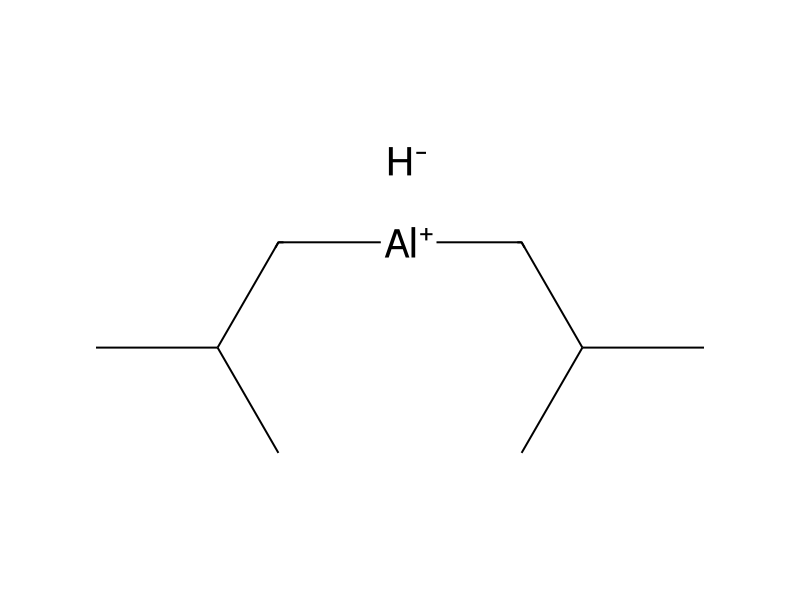
A solution of 1.5M diisobutylaluminum hydride in toluene (7.5 ml) was added to a stirring solution of 4-dimethylamino-2,2-diphenylpentanenitrile (3 g) in THF (7.5 ml), at -78° C. under nitrogen. The resultant mixture was then removed from the dry ice-acetone bath and allowed to warm to room temperature. Stirring was continued at room temperature for 1 day. Saturated ammonium chloride solution was added, and the resultant mixture was extracted with ethyl acetate (3×). The combined extracts were washed with brine and dried (MgSO4). An equal volume of 10% sulfuric acid was added, and the mixture was stirred at room temperature for 3 hours. Water was added, and the aqueous mixture was again extracted with ethyl acetate (3×). The combined extracts were washed with water and dried (MgSO4). Rotary evaporation of the solution gave a crude product which was treated with anhydrous ether. The separated solid material was filtered off, and the filtrate was again rotary-evaporated to yield 1.4 g of 4-dimethylamino-2,2-diphenylpentanal, as a viscous residue which solidified upon standing.