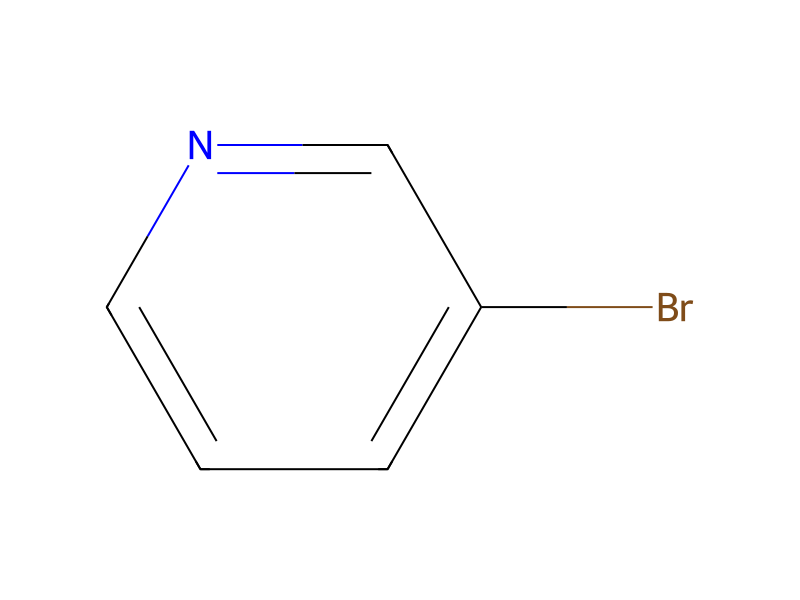
Br[C:2]1[CH:3]=[N:4][CH:5]=[CH:6][CH:7]=1.[CH2:8]([OH:13])[CH2:9][CH2:10][C:11]#[CH:12].C(N(CC)CC)C.O>C(Cl)Cl.Cl[Pd](Cl)([P](C1C=CC=CC=1)(C1C=CC=CC=1)C1C=CC=CC=1)[P](C1C=CC=CC=1)(C1C=CC=CC=1)C1C=CC=CC=1.[Cu]I.C(OCC)(=O)C>[N:4]1[CH:5]=[CH:6][CH:7]=[C:2]([C:12]#[C:11][CH2:10][CH2:9][CH2:8][OH:13])[CH:3]=1To a stirred solution of 3-bromopyridine (4.09 g, 26 mmol), 4-pentyn-1-ol (2.58 g, 31 mmol) and triethylamine (12 ml) in anhydrous DCM (20 ml) was added bis(triphenylphosphine)-palladium dichloride (0.05 g, 0.07 mmol) and copper(I) iodide (0.05 g, 0.26 mmol). The mixture was refluxed for 20 h under argon. After cooling, water (20 ml) was added and the products extracted into DCM. The combined organic extracts were washed with saturated potassium carbonate (50 ml) dried over anhydrous magnesium sulphate, filtered and evaporated to provide a brown oil. Column chromatography (flash silica gel, ethyl acetate) gave 5-(3-pyridyl)-1-pent-4-ynol (0.37 g, 7%) as a colourless oil.