StartseiteMCPWorkbenchSkills
StartseiteWorkbenchBenachrichtigungenMein Bereich
llms.txt · MCP-AnleitungDatenschutz · Nutzungsbedingungen · Supportv1.8.3
  1. Startseite
  2. /Reaktion

Diisopropyl Ether → (3aR,5R,7aS)-5-[(Benzyloxy)methyl]-7a-(2,4-difluorophenyl)hexahydro-1H-pyrano[3,4-c][1,2]oxazole

HRID 1478701
Drucken

Reaktionsgleichung

Reaktionsgleichung von HRID 1478701
B(F)(F)F.CCOCC.[CH2:10]([O:17][CH2:18][C@@H:19]1[O:27][CH2:26][C:22]2=[N:23][O:24][CH2:25][C@@H:21]2[CH2:20]1)[C:11]1[CH:16]=[CH:15][CH:14]=[CH:13][CH:12]=1.C(OC(C)C)(C)C.[F:35][C:36]1[CH:41]=[C:40]([F:42])[CH:39]=[CH:38][C:37]=1I.C([Li])CCC>C1(C)C=CC=CC=1>[CH2:10]([O:17][CH2:18][C@@H:19]1[O:27][CH2:26][C@:22]2([C:39]3[CH:38]=[CH:37][C:36]([F:35])=[CH:41][C:40]=3[F:42])[NH:23][O:24][CH2:25][C@@H:21]2[CH2:20]1)[C:11]1[CH:16]=[CH:15][CH:14]=[CH:13][CH:12]=1
KomponentenReaktionsbedingungenVersuchsvorschriftAufarbeitungQuellen und NachweiseNotizen zur Reaktion

Komponenten

7

Edukt 5

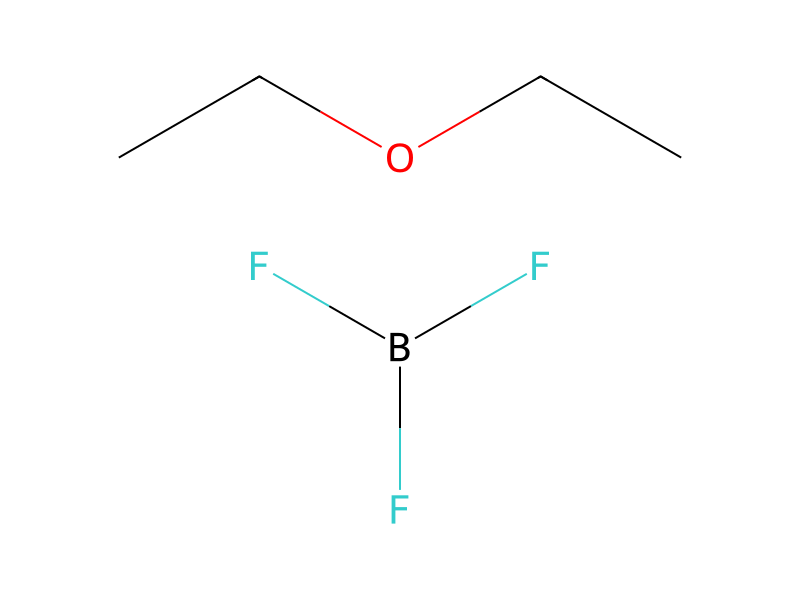
HCID 7914Diisopropyl EtherHCID 8000Boron trifluoride etherateHCID 1375192,4-Difluoro-1-iodobenzeneHCID 57475687(3AR,5R)-5-((benzyloxy)methyl)-3a,4,5,7-tetrahydro-3H-pyrano[3,4-c]isoxazoleHCID 178418339Butyllithium

Produkt 1

HCID 71268780
(3aR,5R,7aS)-5-[(Benzyloxy)methyl]-7a-(2,4-difluorophenyl)hexahydro-1H-pyrano[3,4-c][1,2]oxazole

Reagenzien, Katalysatoren, Lösungsmittel 1

HCID 1140TolueneLösungsmittel

Reaktionsbedingungen

Temperatur
-73.5 °C

Versuchsvorschrift

Boron trifluoride diethyl etherate (60.1 mL, 474 mmol) was added to a solution of (3aR,5R)-5-[(benzyloxy)methyl]-3,3a,4,5-tetrahydro-7H-pyrano[3,4-c][1,2]oxazole (C4) (50.0 g, 202 mmol) in a 1:1 mixture of toluene and diisopropyl ether (2 L) at an internal temperature of −76° C. The reaction was stirred at this temperature for 30 minutes, then treated with 2,4-difluoro-1-iodobenzene (27.1 mL, 226 mmol). While the reaction temperature was maintained at −76 to −71° C., n-butyllithium (2.5 M in hexanes, 85.7 mL, 214 mmol) was slowly added. The reaction mixture was stirred at −76° C. for 1.5 hours, then was quenched with saturated aqueous ammonium chloride solution (1 L) and partitioned between water (1 L) and ethyl acetate (750 mL). After the heterogeneous mixture warmed to room temperature, the aqueous layer was extracted with ethyl acetate (3×250 mL), and the combined organic layers were washed with saturated aqueous sodium chloride solution (550 mL), dried over sodium sulfate, filtered, and concentrated in vacuo. Chromatography on silica gel (Gradient: 0% to 70% ethyl acetate in heptane) afforded the product as a yellow oil. The cis ring fusion was assigned to this and subsequent products from similar reactions on the basis of the expected attack of the organometallic reagent on the convex side of the bicyclic ring system. Yield: 48.14 g, 133.2 mmol, 66%. 1H NMR (400 MHz, CDCl3) δ 7.94 (ddd, J=9, 9, 7 Hz, 1H), 7.28-7.40 (m, 5H), 6.87-6.93 (m, 1H), 6.80 (ddd, J=12.0, 8.6, 2.4 Hz, 1H), 4.60 (AB quartet, JAB=12.1 Hz, ΔνAB=21.4 Hz, 2H), 4.14 (br dd, J=12.8, 1.3 Hz, 1H), 3.82-3.90 (m, 2H), 3.72 (d, J=7.2 Hz, 1H), 3.54-3.60 (m, 2H), 3.50 (dd, half of ABX pattern, J=10.3, 4.1 Hz, 1H), 3.04-3.13 (m, 1H), 1.86 (ddd, J=14.0, 7.0, 2.0 Hz, 1H), 1.49-1.61 (m, 1H).


Aufarbeitung

  1. stirringThe reaction mixture was stirred at −76° C. for 1.5 hours
  2. customwas quenched with saturated aqueous ammonium chloride solution (1 L)
  3. custompartitioned between water (1 L) and ethyl acetate (750 mL)
  4. temperatureAfter the heterogeneous mixture warmed to room temperature
  5. extractionthe aqueous layer was extracted with ethyl acetate (3×250 mL)
  6. washthe combined organic layers were washed with saturated aqueous sodium chloride solution (550 mL)
  7. dry with materialdried over sodium sulfate
  8. filtrationfiltered
  9. concentrationconcentrated in vacuo

Quellen und Nachweise

ORD-Eintrag
ord-2b4b3a7ca39040bd85b1a10411be8bc2
Quelldatensatz
uspto-grants-2016_08
DOI
10.6084/m9.figshare.5104873.v1
Patentnummer
US09403846B2

Notizen zur Reaktion

Auf dieser SeiteKomponentenReaktionsbedingungenVersuchsvorschriftAufarbeitungQuellen und NachweiseNotizen zur Reaktion