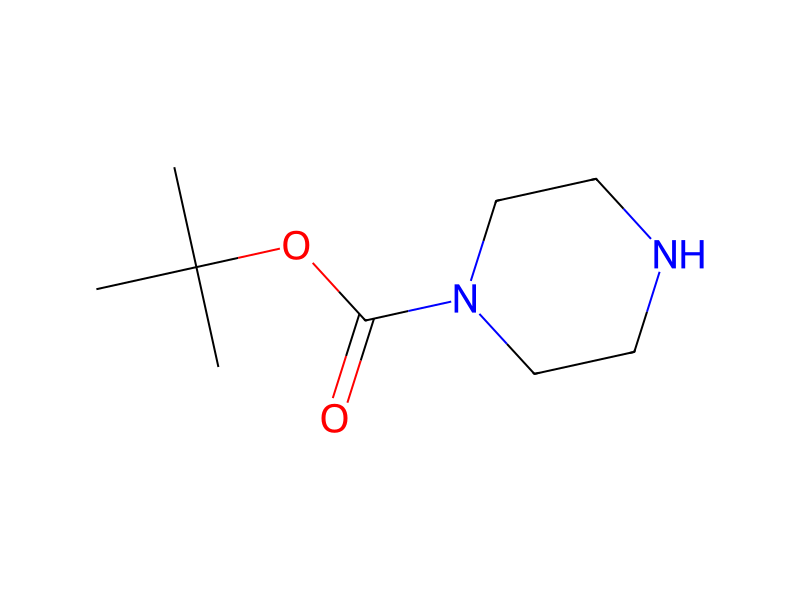
Cl[C:2]1[N:7]=[N:6][C:5]([C:8]([F:11])([F:10])[F:9])=[C:4]([C:12]2[CH:17]=[CH:16][CH:15]=[CH:14][CH:13]=2)[CH:3]=1.[C:18]([N:25]1[CH2:30][CH2:29][NH:28][CH2:27][CH2:26]1)([O:20][C:21]([CH3:24])([CH3:23])[CH3:22])=[O:19].C(N(C(C)C)CC)(C)C>C(#N)C.ClCCl>[C:21]([O:20][C:18]([N:25]1[CH2:30][CH2:29][N:28]([C:2]2[N:7]=[N:6][C:5]([C:8]([F:11])([F:10])[F:9])=[C:4]([C:12]3[CH:17]=[CH:16][CH:15]=[CH:14][CH:13]=3)[CH:3]=2)[CH2:27][CH2:26]1)=[O:19])([CH3:24])([CH3:22])[CH3:23]To a stirred solution of 6-chloro-4-phenyl-3-trifluoromethyl-pyridazine (D3) (7.1 g, 0.0274 mol) and N-Boc-piperazine (5.62 g, 0.0302 mol) in acetonitrile (150 ml) was added diisopropylethylamine (5.1 ml, 0.0302 mol) and the mixture heated at 150° C. for 20 min., under microwave irradiation. After this period, the reaction mixture was diluted with dichloromethane and extracted with water. The organic layer was separated, dried (MgSO4) and the solvents evaporated in vacuo. The crude product was purified by column chromatography (silica; 20% ethyl acetate in heptane, followed by 10% ethyl acetate in dichloromethane). After evaporation of the solvent, the crude product was crystallised from heptane to yield D4 (10.4 g, 93%). C20H23F3N4O2 requires 408; Found 409 (MH+).