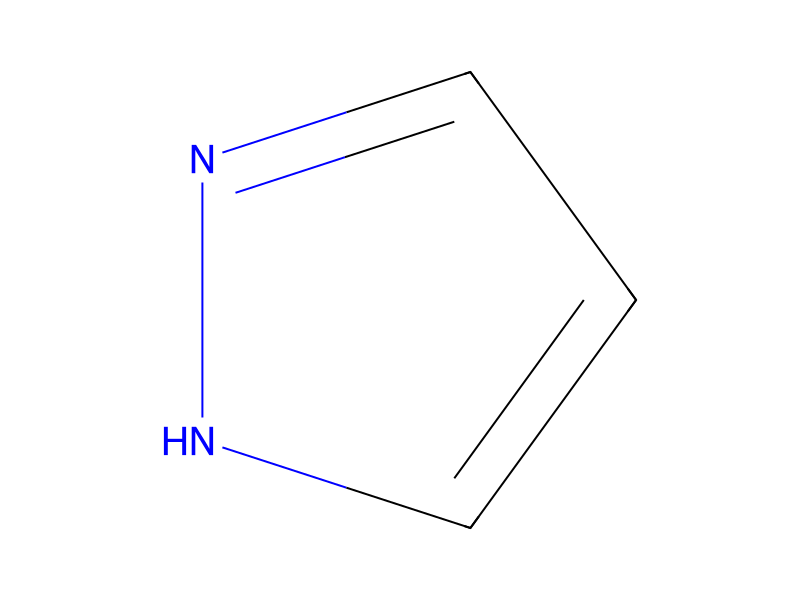
407.9 mg (corresponding to 5.99 mmol) of pyrazole was dissolved in 10 mL of dimethylformamide. Then, 400.0 mg (corresponding to 1.99 mmol) of 5-acetyl-2-bromopyridine and 827.9 mg (corresponding to 5.99 mmol) of potassium carbonate were added thereto. The resulting solution was heated at 100° C. for 5 hours. After the completion of the reaction, the reaction solution was cooled down to room temperature, supplemented with water, and extracted twice with dichloromethane. The combined dichloromethane layer was washed with water and a saturated saline solution, dried over anhydrous magnesium sulfate, and then concentrated under reduced pressure. The resulting crude product was purified by silica gel column chromatography (elution solvent: dichloromethane/ethyl acetate=50/1), to obtain 304.0 mg (corresponding to 1.62 mmol) of 5-acetyl-2-(pyrazole-1-yl)pyridine (FIG. 5, step 1).