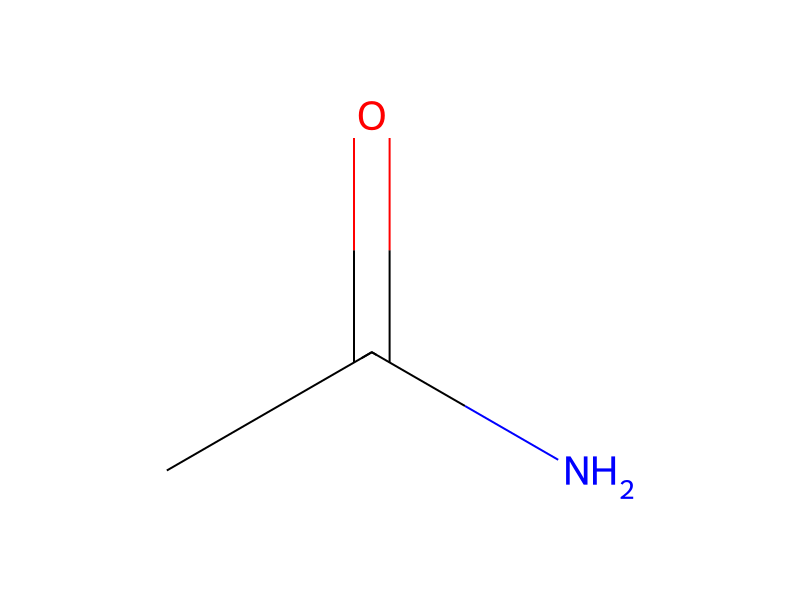
Chloride 19a (0.300 g, 1.69 mmol) was diluted with molten anhydrous acetamide (8 g, 135 mmol) and K2CO3 (1.17 g, 8.45 mmol) was added. The mixture was heated in a sand bath, at reflux (˜230° C.) for 17 h. The mixture was cooled, poured into H2O (120 mL) and extracted with EtOAc (4×30 mL). The organic layers were washed with H2O (3×100 mL) and sat. aq. NaCl (50 mL), dried over anhydrous sodium sulfate, and concentrated. Purification of the residue by flash column chromatography (SiO2, 15% EtOAc in CH2Cl2) afforded the desired compound as a white solid (0.265 g, 78%). 1H-NMR chemical shifts for this compound are consistent with those reported in the literature for the 7-isomer. H-NMR (500 MHz; CDCl3): δ 9.89-9.88 (br s, 1 H), 8.40 (d, J=8.9 Hz, 1 H), 8.15 (d, J=9.0 Hz, 1 H), 7.67 (d, J=8.3 Hz, 1 H), 7.58 (d, J=0.6 Hz, 1 H), 7.29 (dd, J=8.3, 1.4 Hz, 1 H), 2.54 (s, 3 H), 2.27 (s, 3 H).