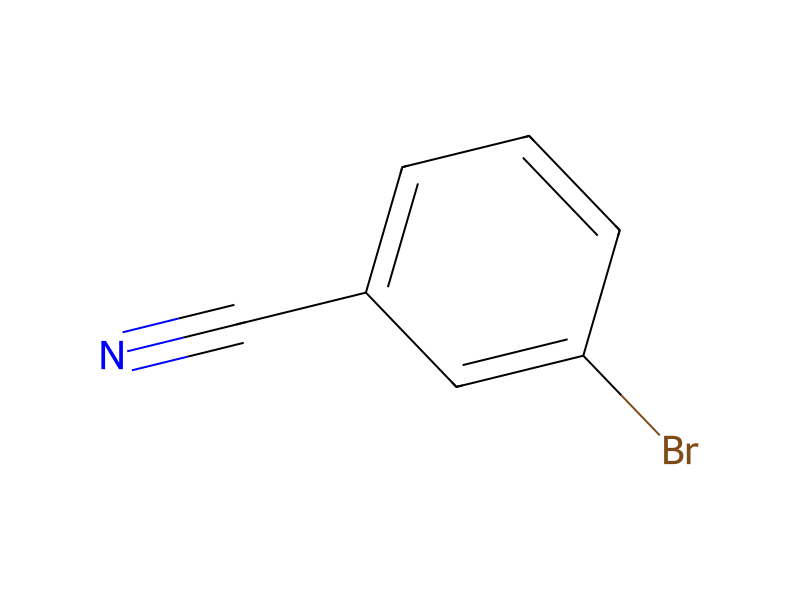
Br[C:2]1([C:14]2[CH:19]=[CH:18][CH:17]=[CH:16][CH:15]=2)[CH:7]=[C:6]([C:8]2[CH:13]=[CH:12][CH:11]=[CH:10][CH:9]=2)[CH:5]=[CH:4][CH2:3]1.[Mg].[Br:21][C:22]1[CH:23]=[C:24]([CH:27]=[CH:28][CH:29]=1)[C:25]#N.C(OCC)(=[O:32])C>O1CCCC1.O>[Br:21][C:22]1[CH:23]=[C:24]([C:25]([C:4]2[CH:3]=[C:2]([C:14]3[CH:19]=[CH:18][CH:17]=[CH:16][CH:15]=3)[CH:7]=[C:6]([C:8]3[CH:13]=[CH:12][CH:11]=[CH:10][CH:9]=3)[CH:5]=2)=[O:32])[CH:27]=[CH:28][CH:29]=1A solution of 20.0 g (64.7 mmol) of 3-bromo-[3,1′;5,1″]terphenyl in 300 ml of tetrahydrofuran is slowly added dropwise to 1.7 g (71.2 mmol) of magnesium turnings, and the mixture is heated under reflux for 3 h. The solution is then cooled to −40° C., and a solution of 11.8 g (65 mmol) of 3-bromobenzonitrile in 100 ml of tetrahydrofuran is added dropwise. After the addition, the solution is heated under reflux for 6 h. After cooling, 600 ml of ethyl acetate and 400 ml of water are added, and the organic phase is separated off, washed three times with 200 ml of water, dried using sodium sulfate and subsequently evaporated to dryness. The residue is recrystallised from ethanol and subsequently dried under reduced pressure. The yield is 21.7 g (53 mmol), corresponding to 81.3% of theory.