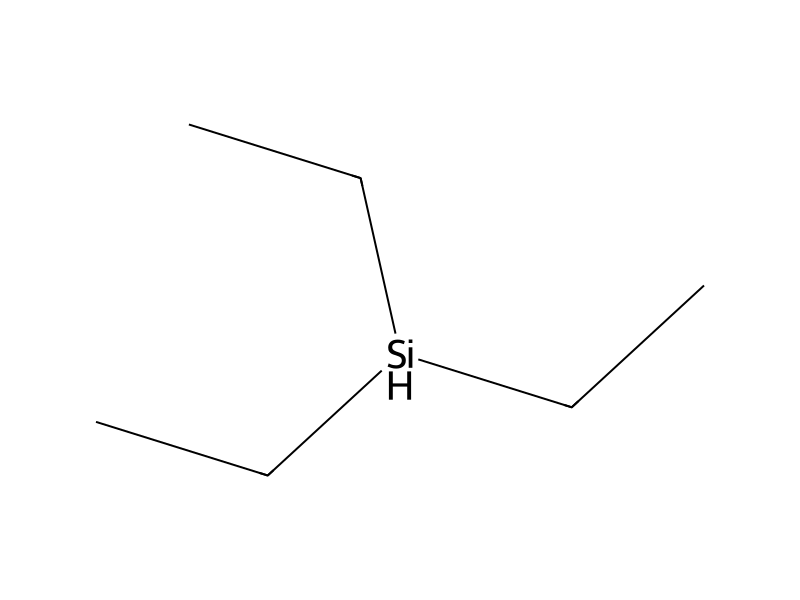
3-nitro-1-(4-octylphenyl)propan-1-one (20 g) and dichloromethane (100 mL) are charged into a round bottom flask at 25-30° C. and stirred. The mixture is cooled to −10° C. to 0° C. and triethylsilane (19.9 g) is added. A solution of titanium tetrachloride (19.57 g) in dichloromethane (100 mL) is added over a period of 15 minutes and the obtained reaction mixture is maintained at −10 to 0° C. for 5 hours. Water (200 mL) precooled to 0-10° C. is slowly added to the reaction mixture over a period of 20 minutes and the temperature is allowed to raise to 25-30° C. The reaction mixture is stirred for about 1 hour, organic layer is separated, washed with 5% sodium bicarbonate solution (100 mL), followed by 20% brine solution (100 mL), the organic layer is concentrated under vacuum at 45° C. to obtain 38.2 g of crude 1-(3-nitropropyl)-4-octylbenzene. Toluene (200 mL) and crude 1-(3-nitropropyl)-4-octylbenzene (38.2 g) are charged into the round bottom flask at 25-30° C. and stirred. Potassium carbonate (18.96 g) and paraformaldehyde (7.21 g) are charged and the reaction mixture is stirred at the same temperature for about 6 hours. The reaction mixture is filtered and washed with toluene (40 mL). The obtained filtrate, water (200 mL) and ethyl acetate (60 mL) are charged into a round bottom flask and stirred for 2 hours. The organic layer is separated, washed with 5% hydrochloric acid solution (100 mL), 5% sodium bicarbonate solution (100 mL) and followed by 5% brine solution (100 mL). The resultant organic layer is concentrated under vacuum at below 45° C. n-Hexane (100 mL) is added to the obtained compound and stirred. The obtained mixture is cooled to 0 to 5° C., maintained at the same temperature for about 60 minutes, filtered and washed with n-hexane (20 mL). The obtained wet compound and toluene (80 mL) are charged into a round bottom flask, heated to 40-45° C. and maintained at the same temperature for about 15 minutes. The reaction mixture is cooled to 0-5° C., maintained for about 45 minutes, filtered and washed the product with toluene (40 mL) precooled to 0-5° C. and the product obtained is dried under vacuum at 25-30° C. to give the title compound.