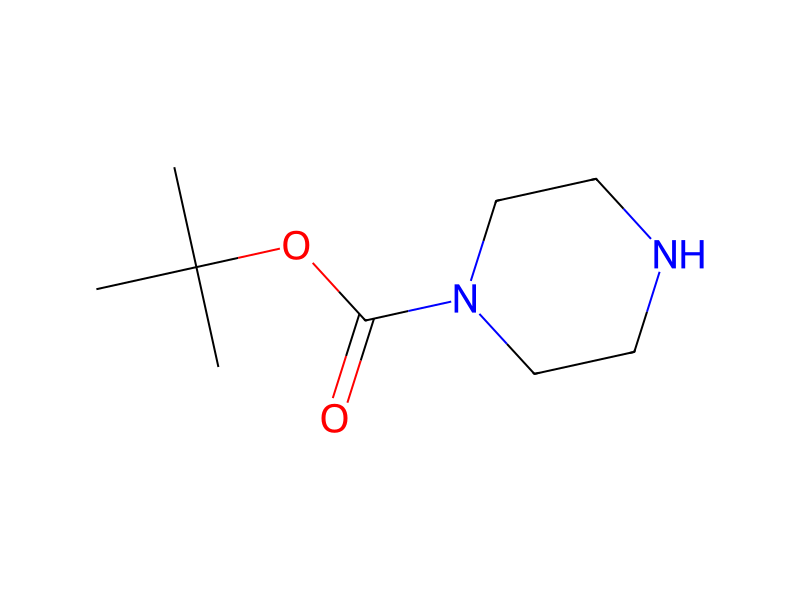
Cl[C:2]1[C:3]2[CH:10]=[C:9]([CH2:11][C:12]([F:15])([F:14])[F:13])[S:8][C:4]=2[N:5]=[CH:6][N:7]=1.C(N(CC)C(C)C)(C)C.C([N:32]1[CH2:37][CH2:36][NH:35][CH2:34][CH2:33]1)(OC(C)(C)C)=O>Cl.O1CCOCC1>[N:32]1([C:2]2[C:3]3[CH:10]=[C:9]([CH2:11][C:12]([F:15])([F:14])[F:13])[S:8][C:4]=3[N:5]=[CH:6][N:7]=2)[CH2:37][CH2:36][NH:35][CH2:34][CH2:33]1190 mg of 4-chloro-6-(2,2,2-trifluoroethyl)thieno[2,3-d]pyrimidine (0.75 mmol) was added to a stirred solution of 290 mg of N,N-diisopropylethylamine (2.25 mmol) and 168 mg of 1-Boc-piperazine (0.9 mmol) in 20 mL and was heated at reflux overnight. Solvent was removed under reduced pressure and the residue was loaded on silica gel column. Elution with DCM:MeOH produced 215 mg of Boc-intermediate as a pale yellow solid. Later it was dissolved in 20 mL of 4M HCl in dioxane and stirred for 2 hs. Solvent was evaporated under reduced pressure and the residue was partitioned between ethyl acetate and saturated sodium carbonate solution. Organic layer was washed with brine, dried over MgSO4 and evaporated to afford 150 mg of 4-(piperazin-1-yl)-6-(2,2,2-trifluoroethyl)thieno[2,3-d]pyrimidine, which was used in the next step without purification.