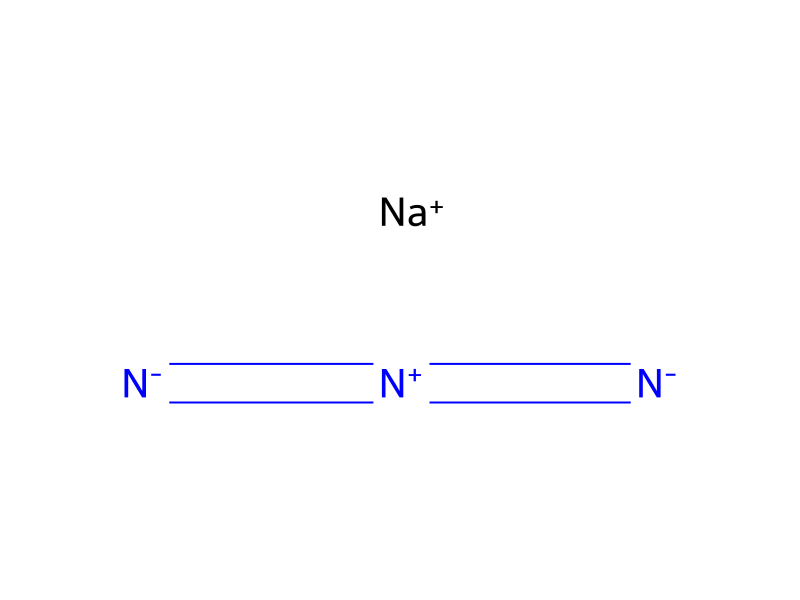
1-(3-Chloro-2-fluorophenyl)-5-methoxy-1H-1,2,3-triazole-4-carboxylic acid: To a solution of 2-fluoro-3-methoxyaniline (1 g, 7.09 mmol) in TFA (10 mL) and water (5 mL) at 0° C. was added an aq. solution of NaNO2 (0.733 g, 10.63 mmol) dropwise. The resulting mixture was stirred at 0° C. for 0.5 h and NaN3 (0.921 g, 14.17 mmol) was added portionwise. The reaction mixture was gradually warmed to rt and stirred for 4 h. The reaction was quenched with water (150 mL) and extracted with EtOAc (2×100 mL). The organic layer was washed with sodium phosphate solution (10%) and brine (50 mL), dried, and concentrated. The resulting brown oil was re-dissolved in DMSO (20 mL) and added t-butylpropiolate (1 mL) followed by K2CO3 (1 g), Cu(OAc)2 (0.2 g), and sodium ascorbate (100 mg). The resulting mixture was stirred at rt overnight. The reaction was quenched with water (200 mL) and extracted with EtOAc (2×100 mL). The organic layer was dried and concentrated. The residue was purified by silica gel chromatography to yield the desired product as brown oil. 1H NMR (400 MHz, CDCl3) δ 13.19 (br. s., 1H), 7.36-7.20 (m, 2H), 7.17-6.95 (m, 1H), 6.76 (td, J=8.1, 1.3 Hz, 1H), 3.91 (s, 3H), 1.74-1.49 (m, 10H). MS(ESI) m/z: 238.0 (M+H)+.