StartseiteMCPWorkbenchSkills
StartseiteWorkbenchBenachrichtigungenMein Bereich
llms.txt · MCP-AnleitungDatenschutz · Nutzungsbedingungen · Supportv1.8.3
  1. Startseite
  2. /Reaktion

Potassium Carbonate → ethyl 2-(4-((2-(3-chlorophenyl)-6,7-dihydro-5H-cyclopenta[b]pyridin-4-yl)(hydroxy)methyl)phenyl)acetate

HRID 1508998
Drucken

Reaktionsgleichung

Reaktionsgleichung von HRID 1508998
[Cl:1][C:2]1[CH:3]=[C:4]([C:8]2[N:13]=[C:12]3[CH2:14][CH2:15][CH2:16][C:11]3=[C:10]([CH:17]=[O:18])[CH:9]=2)[CH:5]=[CH:6][CH:7]=1.[C:19](=O)([O-])[O-].[K+].[K+].CC1(C)C(C)(C)OB([C:33]2[CH:38]=[CH:37][C:36]([CH2:39][C:40]([O:42][CH3:43])=[O:41])=[CH:35][CH:34]=2)O1>O1CCOCC1.[Pd](Cl)Cl.C1(P(C2C3C(=CC=CC=3)C=CC=2)C2C3C(=CC=CC=3)C=CC=2)C2C(=CC=CC=2)C=CC=1>[Cl:1][C:2]1[CH:3]=[C:4]([C:8]2[N:13]=[C:12]3[CH2:14][CH2:15][CH2:16][C:11]3=[C:10]([CH:17]([OH:18])[C:33]3[CH:34]=[CH:35][C:36]([CH2:39][C:40]([O:42][CH2:43][CH3:19])=[O:41])=[CH:37][CH:38]=3)[CH:9]=2)[CH:5]=[CH:6][CH:7]=1
KomponentenReaktionsbedingungenVersuchsvorschriftAufarbeitungQuellen und NachweiseNotizen zur Reaktion

Komponenten

7

Edukt 3

HCID 11430Potassium CarbonateHCID 11219601Methyl 2-[4-(tetramethyl-1,3,2-dioxaborolan-2-yl)phenyl]acetateHCID 903385542-(3-chlorophenyl)-6,7-dihydro-5H-cyclopenta[b]pyridine-4-carbaldehyde

Produkt 1

HCID 90112071ethyl 2-(4-((2-(3-chlorophenyl)-6,7-dihydro-5H-cyclopenta[b]pyridin-4-yl)(hydroxy)methyl)phenyl)acetateAusbeute 75 %

Reagenzien, Katalysatoren, Lösungsmittel 3

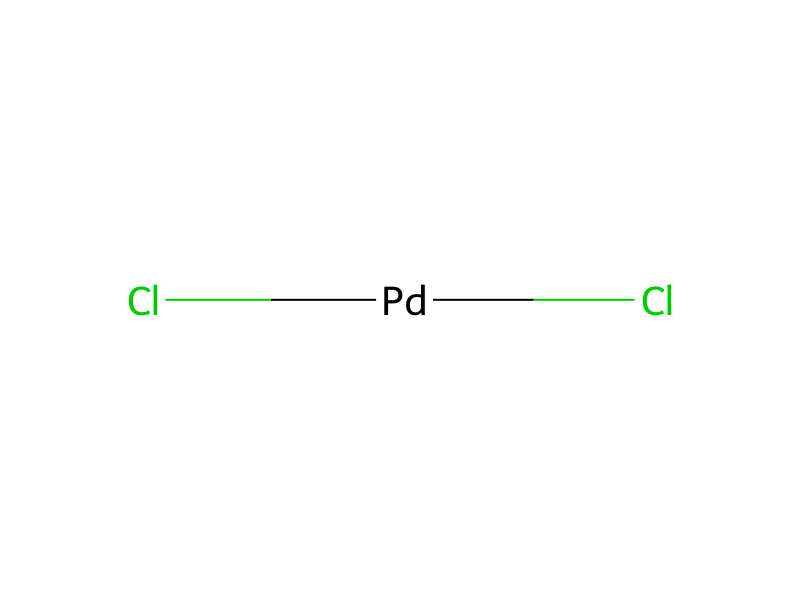
HCID 24290Palladium ChlorideKatalysator
HCID 271443Tri(naphthalen-1-yl)phosphaneKatalysator
HCID 312751,4-DioxaneLösungsmittel

Reaktionsbedingungen

Temperatur
100 °C

Versuchsvorschrift

To a suspension of 2-(3-chlorophenyl)-6,7-dihydro-5H-cyclopenta[b]pyridine-4-carbaldehyde (0.210 g, 0.81 mmol) in dioxane (10 mL) was added palladium chloride (0.007 g, 0.040 mmol), trinaphthyl phosphine (0.017 g, 0.040 mmol), potassium carbonate 0.336 g, 2.43 mmol), and methyl 2-(4-(4,4,5,5-tetramethyl-1,3,2-dioxaborolan-2-yl)phenyl)acetate (0.200 g, 0.97 mmol). The mixture was purged with nitrogen and then heated to 100° C. under sealed conditions for 16 h. After this time, the mixture was diluted with water and extracted with ethyl acetate. The organic layer were dried over anhydrous sodium sulfate, filtered, and the filtrate was concentrated. The residue was purified by column chromatography (silica, hexanes/ethyl acetate) to afford the title compound (0.250 g, 75%) as a white foam. MW=421.9. 1H NMR (CDCl3, 500 MHz) δ 8.01-7.97 (m, 1H), 7.87-7.83 (m, 1H), 7.76 (s, 1H), 7.40-7.23 (m, 6H), 5.81 (s, 1H), 4.13 (q, J=7.0 Hz, 2H), 3.59 (s, 2H), 3.07-2.98 (m, 2H), 2.87-2.79 (m, 1H), 2.64-2.49 (m, 1H), 2.08 (quin, J=7.5 Hz, 2H), 1.30-1.21 (m, 3H); APCI MS m/z 422 [M+H]+.

Aufarbeitung

  1. customThe mixture was purged with nitrogen
  2. additionAfter this time, the mixture was diluted with water
  3. extractionextracted with ethyl acetate
  4. dry with materialThe organic layer were dried over anhydrous sodium sulfate
  5. filtrationfiltered
  6. concentrationthe filtrate was concentrated
  7. customThe residue was purified by column chromatography (silica, hexanes/ethyl acetate)

Quellen und Nachweise

ORD-Eintrag
ord-ea6286a546b34db89b1df17cb219fe54
Quelldatensatz
uspto-grants-2015_12
DOI
10.6084/m9.figshare.5104873.v1
Patentnummer
US09221843B2

Notizen zur Reaktion

Auf dieser SeiteKomponentenReaktionsbedingungenVersuchsvorschriftAufarbeitungQuellen und NachweiseNotizen zur Reaktion