StartseiteMCPWorkbenchSkills
StartseiteWorkbenchBenachrichtigungenMein Bereich
llms.txt · MCP-AnleitungDatenschutz · Nutzungsbedingungen · Supportv1.8.3
  1. Startseite
  2. /Reaktion

Chloroacetyl chloride → tert-butyl 1-(4-(2-oxo-7-phenyl-2,3-dihydro-1H-pyrido[2,3-b][1,4]oxazin-6-yl)phenyl)cyclobutylcarbamate

HRID 1509122
Drucken

Reaktionsgleichung

Reaktionsgleichung von HRID 1509122
[C:1]([O:5][C:6](=[O:32])[NH:7][C:8]1([C:12]2[CH:17]=[CH:16][C:15]([C:18]3[C:23]([C:24]4[CH:29]=[CH:28][CH:27]=[CH:26][CH:25]=4)=[CH:22][C:21]([NH2:30])=[C:20]([OH:31])[N:19]=3)=[CH:14][CH:13]=2)[CH2:11][CH2:10][CH2:9]1)([CH3:4])([CH3:3])[CH3:2].CCN(C(C)C)C(C)C.Cl[CH2:43][C:44](Cl)=[O:45]>C(Cl)Cl>[C:1]([O:5][C:6](=[O:32])[NH:7][C:8]1([C:12]2[CH:13]=[CH:14][C:15]([C:18]3[C:23]([C:24]4[CH:25]=[CH:26][CH:27]=[CH:28][CH:29]=4)=[CH:22][C:21]4[NH:30][C:44](=[O:45])[CH2:43][O:31][C:20]=4[N:19]=3)=[CH:16][CH:17]=2)[CH2:11][CH2:10][CH2:9]1)([CH3:4])([CH3:2])[CH3:3]
KomponentenVersuchsvorschriftAufarbeitungQuellen und NachweiseNotizen zur Reaktion

Komponenten

5

Edukt 3

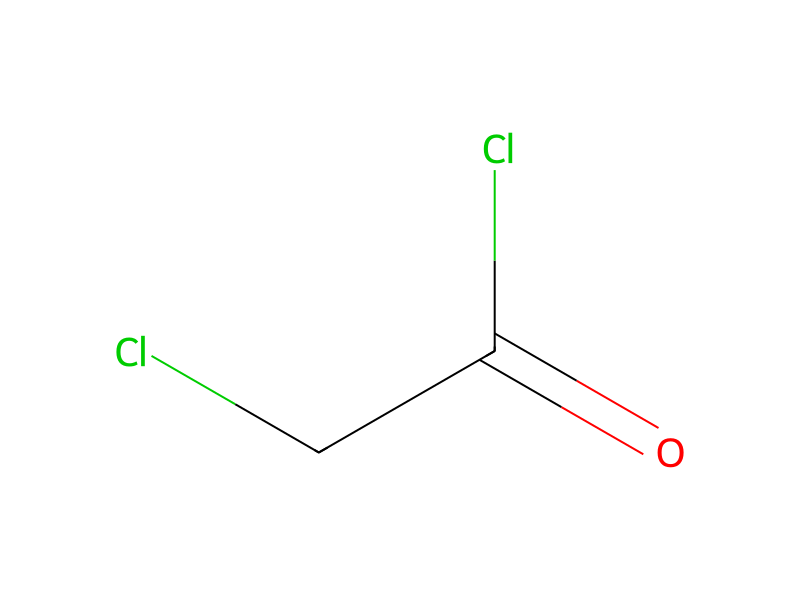
HCID 6577Chloroacetyl chlorideHCID 81531DiisopropylethylamineHCID 178452604HCID 178452604, Verbindung

Produkt 1

HCID 67256382tert-butyl 1-(4-(2-oxo-7-phenyl-2,3-dihydro-1H-pyrido[2,3-b][1,4]oxazin-6-yl)phenyl)cyclobutylcarbamateAusbeute 42 %

Reagenzien, Katalysatoren, Lösungsmittel 1

HCID 6344
Dichloromethane
Lösungsmittel
2×

Versuchsvorschrift

To a solution of tert-butyl(1-(4-(5-amino-6-hydroxy-3-phenylpyridin-2-yl)phenyl)cyclobutyl)carbamate (1.8 g, 4.17 mmol), DIPEA (3.63 ml, 20 mmol) in DCM (100 ml) at 0° C. was added a solution of chloroacetyl chloride (0.465 ml) in DCM (20 ml). The resulting mixture was stirred at room temperature for 16 h. The reaction mixture was concentrated to dryness under reduced pressure. To the residue was added MIBK (120 ml) and saturated sodium bicarbonate (120 ml). The resulting mixture was heated at 115° C. for 16 h. After cooled down to room temperature, the MIBK was removed under reduced pressure. The residue was extracted with ethyl acetate (75 ml). The layers were separated and the aqueous phase extracted into ethyl acetate (2×50 ml). The combined organic phases were washed with water (150 ml) and brine (150 ml), dried over Na2SO4, filtered and concentrated to dryness under reduced pressure. The resulting residue was purified by Biotage silica gel chromatography (gradient 0 to 2% methanol in DCM) to give the title compound (0.82 g, 42%). LCMS (Method A): RT=6.55 min, M+1=472. 1H NMR (500 MHz, CDCl3): 7.3-7.0 (10H, m), 4.96 (1H, br), 4.82 (2H, s), 2.55-2.25 (4H, m), 2.1-1.9 (1H, m), 1.8-1.65 (1H, m), 1.35-1.1 (9H, br).

Aufarbeitung

  1. concentrationThe reaction mixture was concentrated to dryness under reduced pressure
  2. additionTo the residue was added MIBK (120 ml) and saturated sodium bicarbonate (120 ml)
  3. temperatureThe resulting mixture was heated at 115° C. for 16 h
  4. temperatureAfter cooled down to room temperature
  5. customthe MIBK was removed under reduced pressure
  6. extractionThe residue was extracted with ethyl acetate (75 ml)
  7. customThe layers were separated
  8. extractionthe aqueous phase extracted into ethyl acetate (2×50 ml)
  9. washThe combined organic phases were washed with water (150 ml) and brine (150 ml)
  10. dry with materialdried over Na2SO4
  11. filtrationfiltered
  12. concentrationconcentrated to dryness under reduced pressure
  13. customThe resulting residue was purified by Biotage silica gel chromatography (gradient 0 to 2% methanol in DCM)

Quellen und Nachweise

ORD-Eintrag
ord-9814d64dac9748acbaf894e15b286357
Quelldatensatz
uspto-grants-2015_12
DOI
10.6084/m9.figshare.5104873.v1
Patentnummer
US09221838B2

Notizen zur Reaktion

Auf dieser SeiteKomponentenVersuchsvorschriftAufarbeitungQuellen und NachweiseNotizen zur Reaktion