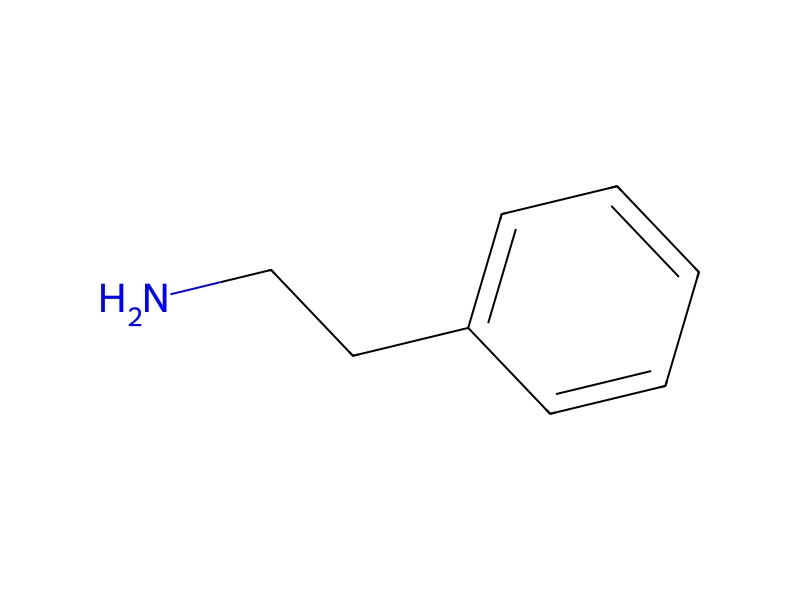
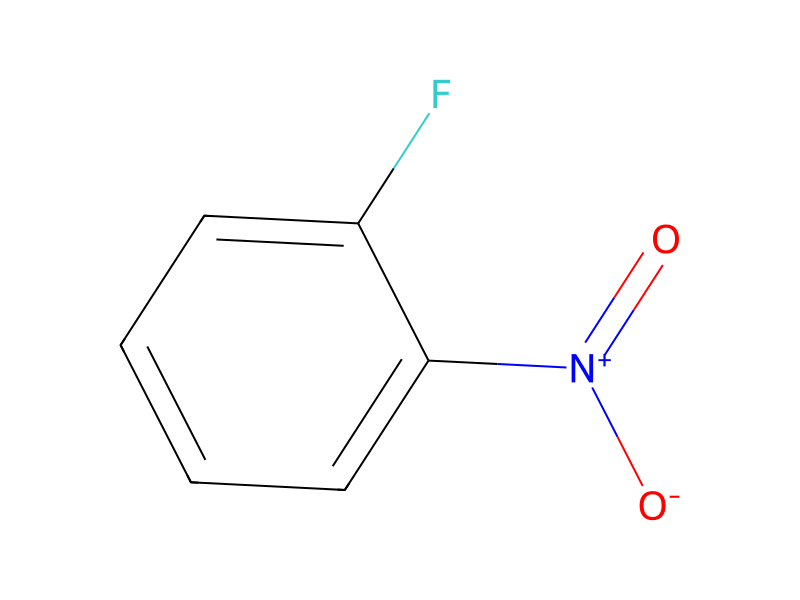
[C:1]1([CH2:7][CH2:8][NH2:9])[CH:6]=[CH:5][CH:4]=[CH:3][CH:2]=1.F[C:11]1[CH:16]=[CH:15][CH:14]=[CH:13][C:12]=1[N+:17]([O-:19])=[O:18].C(=O)([O-])[O-].[K+].[K+].O>CS(C)=O>[C:1]1([CH2:7][CH2:8][NH:9][C:11]2[CH:16]=[CH:15][CH:14]=[CH:13][C:12]=2[N+:17]([O-:19])=[O:18])[CH:6]=[CH:5][CH:4]=[CH:3][CH:2]=1A mass of 4.8 g (0.04 mol) of 2-phenylethylamine was added dropwise, at ambient temperature, to a mixture of 5.6 g (0.04 mol) of 2-fluoronitrobenzene and 11.06 g (0.08 mol) of anhydrous potassium carbonate in 30 ml of DMSO. The mixture was heated at 100° C. for 3 hours. The mixture was then cooled to ambient temperature and was added to 100 ml of water, which led to the precipitation of a light orange compound. The solid was recovered by filtration and dried using a desiccator at reduced pressure. A mass of 9.4 g of orange crystals was obtained with a yield of 98%. The melting point found was coherent with the theoretical value, i.e. 64-66° C.