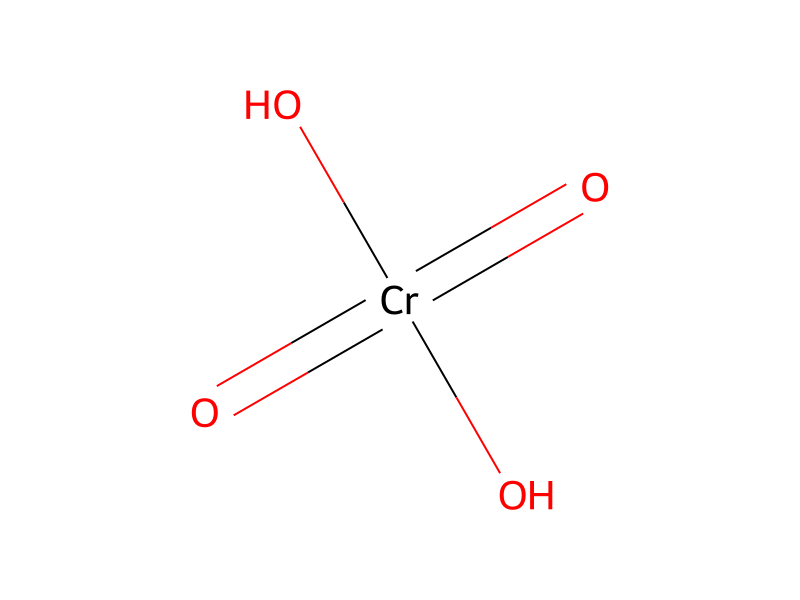
[F:1][C:2]1[CH:7]=[CH:6][C:5]([CH:8]([OH:28])[CH2:9][CH2:10][CH2:11][N:12]2[CH2:17][CH2:16][CH:15]([N:18]3[C:22]4[CH:23]=[CH:24][CH:25]=[CH:26][C:21]=4[NH:20][C:19]3=[O:27])[CH2:14][CH2:13]2)=[CH:4][CH:3]=1.CC(C)=O.[Cr](O)(O)(=O)=O.[OH-].[Na+]>O>[O:27]=[C:19]1[N:18]([CH:15]2[CH2:16][CH2:17][N:12]([CH2:11][CH2:10][CH2:9][C:8]([C:5]3[CH:4]=[CH:3][C:2]([F:1])=[CH:7][CH:6]=3)=[O:28])[CH2:13][CH2:14]2)[C:22]2[CH:23]=[CH:24][CH:25]=[CH:26][C:21]=2[NH:20]1To a stirred mixture of 4 g of 1-(p-fluorophenyl)-4-[4-(2-oxo-1-benzimidazolinyl)piperidino]-1-butanol and 100 ml of acetone was added dropwise a chromic acid solution (prepared from 2 g of chromic anhydride, 5 ml of water and 2 ml of sulfuric acid) under cooling with ice. The mixture was stirred over night at room temperature, poured into 600 ml of cold water and made alkaline by addition of a 10% aqueous sodium hydroxide solution. The basic material which was separated was extracted twice with each 100 ml of chloroform and the combined extracts were washed with water and evaporated to dryness. Recrystallization of the solid residue from aqueous acetone gave γ-[4-(2-oxo-1-benzimidazolinyl)-piperidino]-p-fluorobutyrophenone, melting at 171° - 172°C.