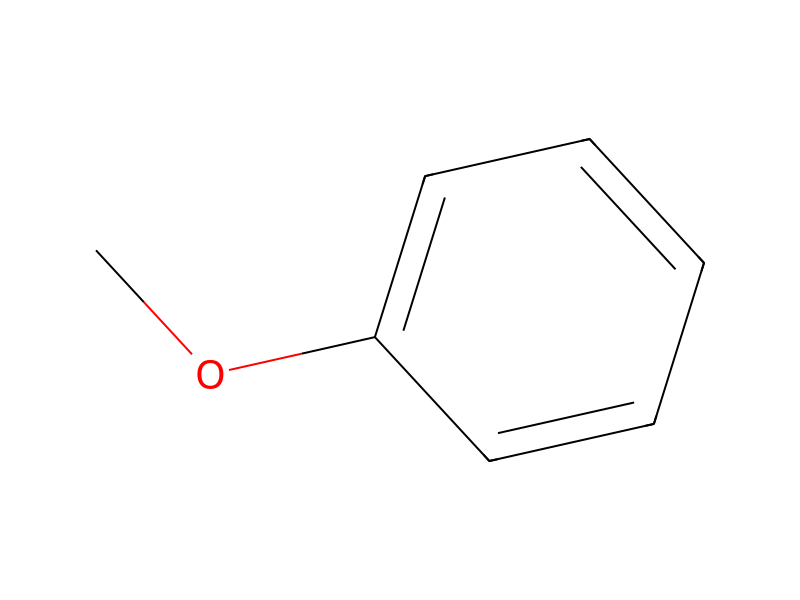
[C:1]1([O:7][CH3:8])[CH:6]=[CH:5][CH:4]=[CH:3][CH:2]=1.C1(C)C=CC(S(O)(=O)=O)=CC=1.O[CH2:21][C:22]1[CH:27]([C:28]([OH:30])=[O:29])[N:26]2[C:31](=[O:43])[CH:32]([NH:33][C:34](=[O:42])[CH2:35][C:36]3[CH:41]=[CH:40][CH:39]=[CH:38][CH:37]=3)[C@H:25]2[S:24][CH:23]=1>O1CCOCC1>[CH3:8][O:7][C:1]1[CH:6]=[CH:5][C:4]([CH2:21][C:22]2[CH:27]([C:28]([OH:30])=[O:29])[N:26]3[C:31](=[O:43])[CH:32]([NH:33][C:34](=[O:42])[CH2:35][C:36]4[CH:37]=[CH:38][CH:39]=[CH:40][CH:41]=4)[C@H:25]3[S:24][CH:23]=2)=[CH:3][CH:2]=1A solution of 0.044 g of anisole and 0.0172 g of p-toluenesulphonic acid in 2 ml of anhydrous dioxane is mixed with 0.035 g of 3-hydroxymethyl-7-(N-phenylacetyl-amino)-ceph-2-em-4ξ-carboxylic acid and the resulting solution is left to stand for one hour at room temperature. The solvent is removed under reduced pressure and the residue is triturated with diethyl ether to remove the excess of p-toluenesulphonic acid and is worked up in accordance with the process described in example 6. 3-(4-Methoxy-benzyl)-7-(N-phenylacetyl-amino)-ceph-2-em-4ξ-carboxylic acid containing a small amount of the corresponding 2-methoxybenzyl compound is thus obtained; in a thin layer chromatogram, this acid does not differ from the product of the process of example 1.