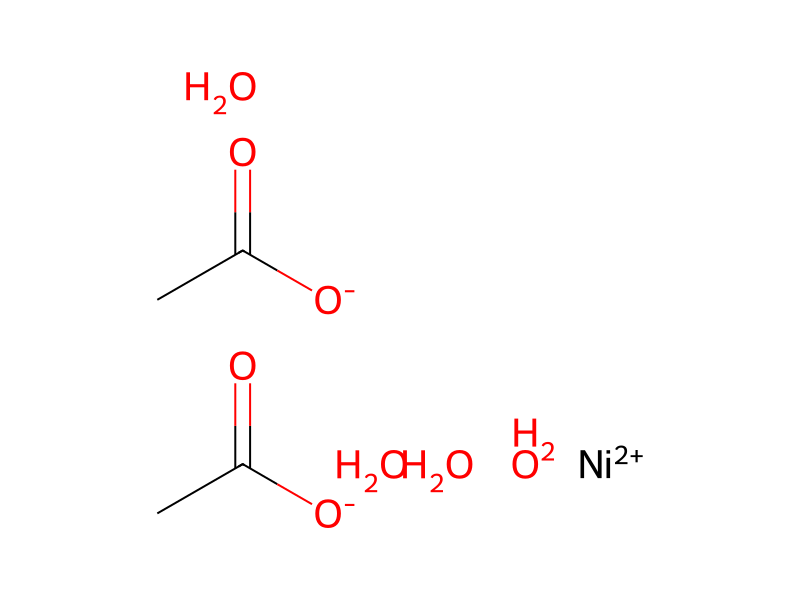
[H][H].[BH4-].[Na+].CC(C)=O.[Cl:9][C:10]1[CH:15]=[C:14](/[C:16](/[CH3:21])=[CH:17]/[C:18](=[O:20])[CH3:19])[CH:13]=[CH:12][C:11]=1[C:22]1[CH:27]=[CH:26][CH:25]=[CH:24][CH:23]=1>C(O)C.O.O.O.O.C([O-])(=O)C.[Ni+2].C([O-])(=O)C.B#[Ni]>[Cl:9][C:10]1[CH:15]=[C:14]([CH:16]([CH3:21])[CH2:17][C:18](=[O:20])[CH3:19])[CH:13]=[CH:12][C:11]=1[C:22]1[CH:23]=[CH:24][CH:25]=[CH:26][CH:27]=117.3 Gm (0.0695 mol) of nickel(II)acetate tetrahydrate, dissolved in 600 ml of 95% ethanol, were reduced in a hydrogenation apparatus in a hydrogen atmosphere with 70 ml of a 1 M sodium borohydride solution to black, colloidal nickel boride (P-2-catalyst). To remove any unreacted borohydride which may be present, 16 gm (0.276 mol) of acetone were first added, and then the mixture was shaken at room temperature for 1 hour and, after addition of 35.0 gm (0.129 mol) of (E)-4-(2-chloro-4-biphenylyl)-3-pentene-2-one, hydrogenated at a hydrogen pressure of 5 atmospheres until hydrogen absorption had ceased. The catalyst was filtered off, the filtrate was evaporated in vacuo, and the residue was distributed between the water and ethyl acetate. The organic layer was dried over sodium sulfate and evaporated, and the residue was distilled in a high vacuum. 28.0 Gm (80% of theory) of colorless crystals were obtained which, after recrystallization from methanol, melted 54°-55°C.