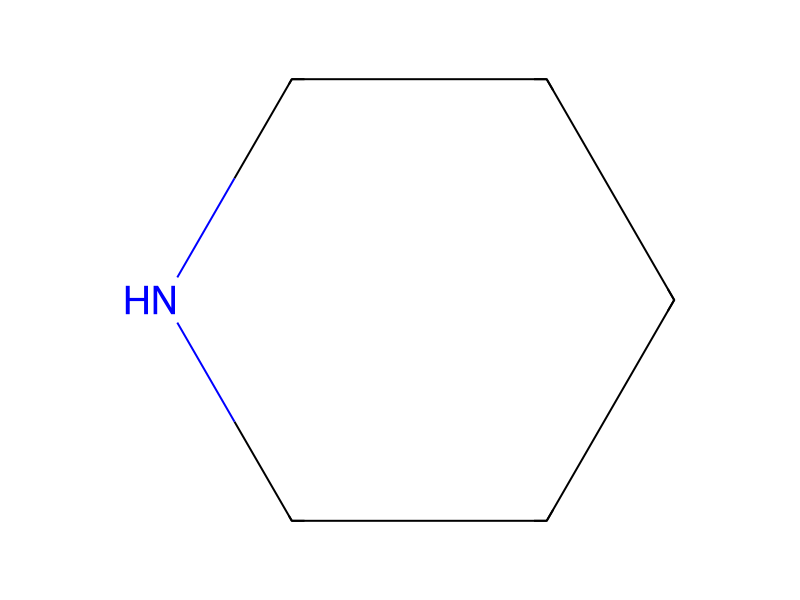
Br[CH2:2][CH2:3][N:4]1[C:8]2=[N:9][CH:10]=[CH:11][CH:12]=[C:7]2[O:6][C:5]1=[O:13].[NH:14]1[CH2:19][CH2:18][CH2:17][CH2:16][CH2:15]1.C(N(C(C)C)CC)(C)C>C(#N)C>[N:14]1([CH2:2][CH2:3][N:4]2[C:8]3=[N:9][CH:10]=[CH:11][CH:12]=[C:7]3[O:6][C:5]2=[O:13])[CH2:19][CH2:18][CH2:17][CH2:16][CH2:15]10.01 mol of 3-(2-bromoethyl)-3H-oxazolo[4,5-b]-pyridin-2-one, dissolved in acetonitrile, 0.15 mol of piperidine and 0.015 mol of diisopropylethylamine are introduced into a round-bottomed flask placed under argon and surmounted by a condenser. The mixture is brought to 80° C. for 12 hours It is cooled, the acetonitrile is evaporated off under vacuum and the residue is taken up with water. The alkalinity of the medium is checked and the medium is extracted with dichloromethane. The organic phase is dried over magnesium sulfate and evaporated and the residue is recrystallized.