N-Hydroxyphthalimide → 2-(Cyclopent-3-enyloxy)isoindoline-1,3-dione
Reaktionsgleichung

[CH:1]1([OH:6])[CH2:5][CH:4]=[CH:3][CH2:2]1.O[N:8]1[C:12](=[O:13])[C:11]2=[CH:14][CH:15]=[CH:16][CH:17]=[C:10]2[C:9]1=[O:18].C1(P(C2C=CC=CC=2)C2C=CC=CC=2)C=CC=CC=1.N(C(OCC)=O)=NC(OCC)=O>O1CCCC1>[CH:1]1([O:6][N:8]2[C:9](=[O:18])[C:10]3=[CH:17][CH:16]=[CH:15][CH:14]=[C:11]3[C:12]2=[O:13])[CH2:5][CH:4]=[CH:3][CH2:2]1Komponenten
6
Edukt 4
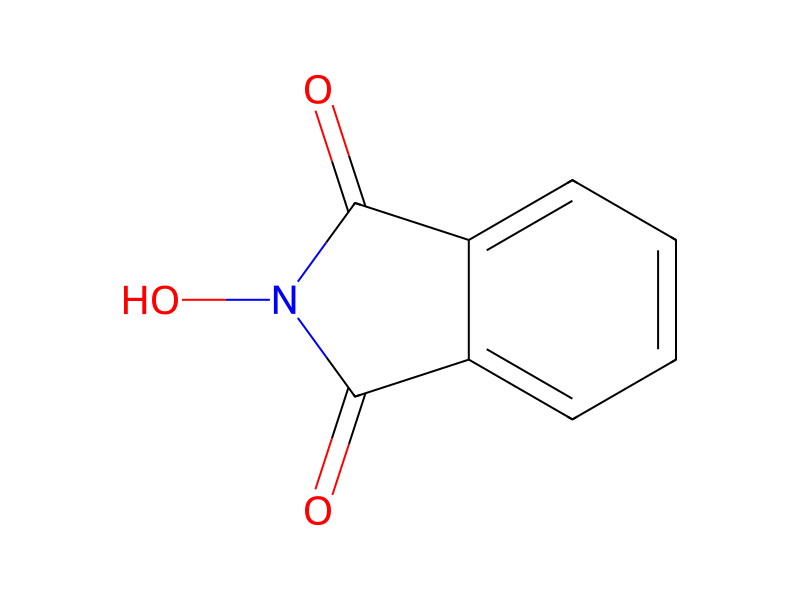



Produkt 1

Reagenzien, Katalysatoren, Lösungsmittel 1

Reaktionsbedingungen
- Temperatur
- 45 °C
Versuchsvorschrift
To a solution of 3-cyclopenten-1-ol (15.3 g), N-hydroxyphthalimide (29.7 g) and triphenylphosphine (47.7 g) in tetrahydrofuran (250 ml) was added diethyl azodicarboxylate (31.7 g) at 40° to 50° C. After stirring at 45° C. for 2 hours, the reaction mixture was poured into ice-water and extracted with ethyl acetate. The separated organic layer was washed with 5% aqueous solution of sodium bicarbonate, brine, successively and dried over magnesium sulfate. The solvent was evaporated in vacuo, and the residual oil was subjected to column chromatography on silica gel. The desired product was eluted with 15% ethyl acetate in n-hexane to give N-(3-cyclopenten-1-yloxy)phthalimide (25.6 g).
Aufarbeitung
- extractionextracted with ethyl acetate
- washThe separated organic layer was washed with 5% aqueous solution of sodium bicarbonate, brine
- dry with materialsuccessively and dried over magnesium sulfate
- customThe solvent was evaporated in vacuo
- washThe desired product was eluted with 15% ethyl acetate in n-hexane
Quellen und Nachweise
- ORD-Eintrag
- ord-149b2c5b5ccb41d99ccc5a2f9791eeaa
- Quelldatensatz
- uspto-grants-1993_03
- Patentnummer
- US05194432
Notizen zur Reaktion
Wird geladen…