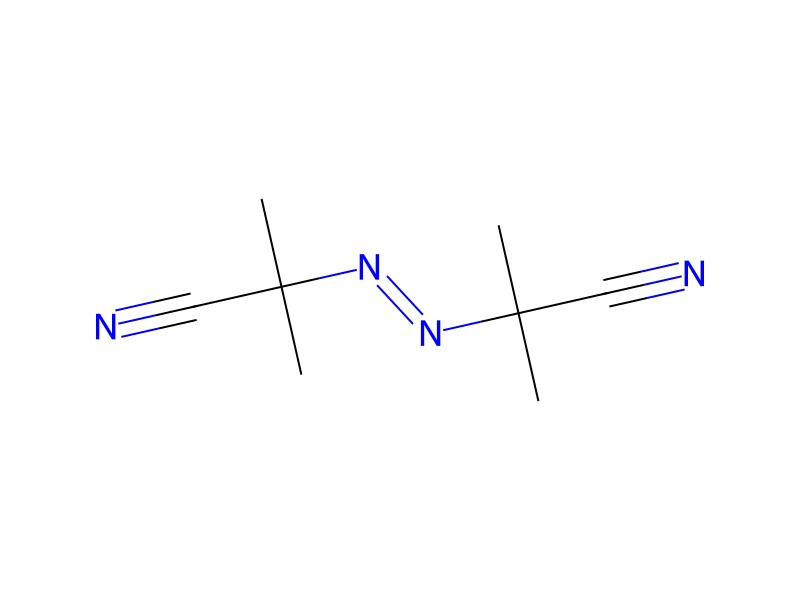
CC(N=NC(C#N)(C)C)(C#N)C.[F:13][C:14]([F:43])([F:42])[C:15](Cl)([C:32]1[CH:37]=[CH:36][C:35]([O:38][CH2:39][CH3:40])=[CH:34][CH:33]=1)[CH2:16][O:17][CH2:18][C:19]1[CH:24]=[CH:23][CH:22]=[C:21]([O:25][C:26]2[CH:31]=[CH:30][CH:29]=[CH:28][CH:27]=2)[CH:20]=1.C([SnH](CCCC)CCCC)CCC.O>C1(C)C=CC=CC=1>[F:13][C:14]([F:42])([F:43])[CH:15]([C:32]1[CH:33]=[CH:34][C:35]([O:38][CH2:39][CH3:40])=[CH:36][CH:37]=1)[CH2:16][O:17][CH2:18][C:19]1[CH:24]=[CH:23][CH:22]=[C:21]([O:25][C:26]2[CH:31]=[CH:30][CH:29]=[CH:28][CH:27]=2)[CH:20]=1A few crystals of α,α-azoisobutyronitrile (AIBN) were added to a solution of 1,1,1-trifluoro-2-chloro-2-(4-ethoxyphenyl)-3-(3-phenoxybenzyloxy)propane (0.36 g) in toluene (15 cm3), and the mixture was cooled in an ice bath whilst tri-n-butyl tin hydride (0.25 cm3) was added. The reaction mixture was heated at the reflux temperature for 1.5 hours under an atmosphere of nitrogen. Analysis by gas liquid chromatography at this time showed no trace of the starting chloro compound. The mixture was cooled, poured I into water (50 cm3), and extracted with diethyl ether (4×30 cm3). The combined organic layers were dried over anhydrous sodium sulphate and the residual oil after evaporation of the solvent under reduced pressure was purified by column chromatography on a silica gel support, eluting with n-hexane containing 6% by volume diethyl ether, to give 1,1,1-trifluoro-2-(4-ethoxyphenyl)-3-(3-phenoxybenzyloxy)-propane (0.3 g) as an oil.