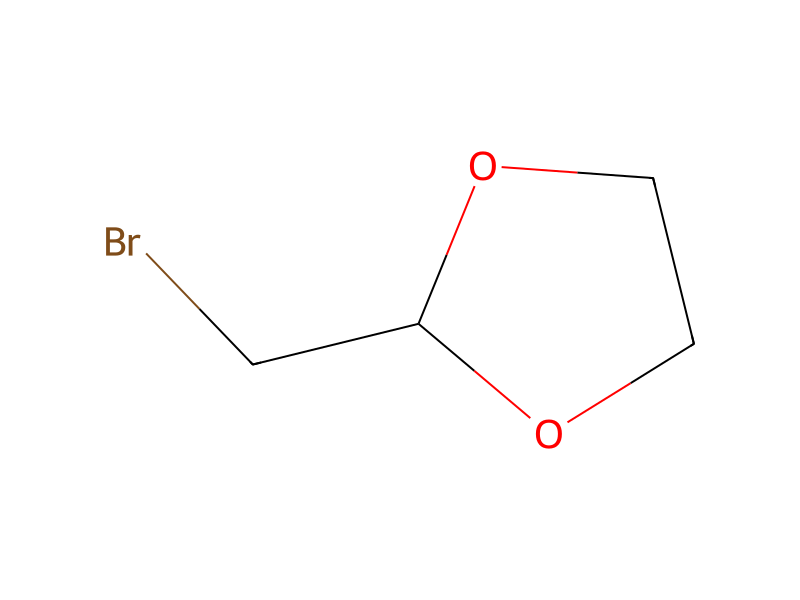
[O:1]=[C:2]1[C:11]2[C:6](=[CH:7][CH:8]=[C:9]([C:12]([O:14][CH3:15])=[O:13])[CH:10]=2)[CH:5]=[CH:4][NH:3]1.C(=O)([O-])[O-].[K+].[K+].Br[CH2:23][CH:24]1[O:28][CH2:27][CH2:26][O:25]1.O>CN(C=O)C>[O:25]1[CH2:26][CH2:27][O:28][CH:24]1[CH2:23][N:3]1[CH:4]=[CH:5][C:6]2[C:11](=[CH:10][C:9]([C:12]([O:14][CH3:15])=[O:13])=[CH:8][CH:7]=2)[C:2]1=[O:1]To a solution of methyl 1-oxo-1,2-dihydroisoquinoline-7-carboxylate (0.5 g, 1.72 mmol) in DMF (10 mL) was added potassium carbonate (1.2 g, 8.6 mmol) and 2-(bromomethyl)-1,3-dioxolane (0.62 mL, 6.03 mmol). The reaction mixture was heated at 140° C. and stirred for 5 h. The mixture was cooled to rt, water was added and the mixture was extracted with EtOAc (2×). The combined organic phases were then washed with water, and brine, dried over anhydrous Na2SO4, filtered and concentrated. The residue was purified by flash silica gel chromatography (0% to 50% EtOAc/hexanes) to afford methyl 2-(1,3-dioxolan-2-ylmethyl)-1-oxo-1,2-dihydroisoquinoline-7-carboxylate (0.32 g, 64%). LC-MS: (FA) ES+ 290.