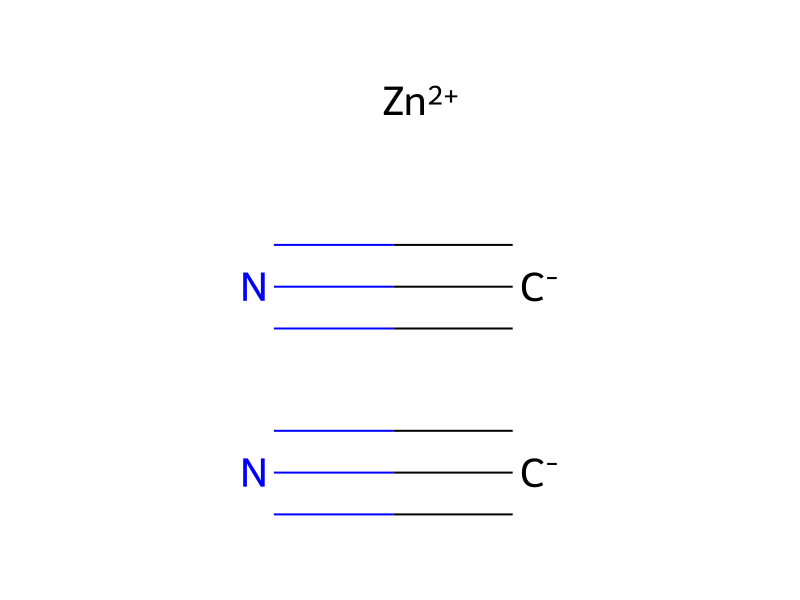
[Br:1][C:2]1[CH:3]=[C:4]2[C:8](=[C:9](I)[CH:10]=1)[NH:7][CH:6]=[C:5]2[CH:12]([CH3:14])[CH3:13].[CH3:15][N:16](C=O)C>[C-]#N.[Zn+2].[C-]#N.C1C=CC([P]([Pd]([P](C2C=CC=CC=2)(C2C=CC=CC=2)C2C=CC=CC=2)([P](C2C=CC=CC=2)(C2C=CC=CC=2)C2C=CC=CC=2)[P](C2C=CC=CC=2)(C2C=CC=CC=2)C2C=CC=CC=2)(C2C=CC=CC=2)C2C=CC=CC=2)=CC=1>[Br:1][C:2]1[CH:3]=[C:4]2[C:8](=[C:9]([C:15]#[N:16])[CH:10]=1)[NH:7][CH:6]=[C:5]2[CH:12]([CH3:14])[CH3:13]To a stirred solution of 5-bromo-7-iodo-3-(1-methylethyl)-1H-indole (3.05 g, 8.38 mmol) in DMF (50 mL) was added zinc cyanide (0.52 g, 4.43 mmol) and tetrakis(triphenylphosphine)palladium (0.8 g, 0.692 mmol). The reaction was purged with N2, stirred and heated at 90° C. LCMS indicated that the reaction was complete. The reaction was evaporated to dryness under vacuum. Purification by silica gel chromatography (Analogix, SF25-60 g, 0 to 10% EtOAc in hexanes) and trituration with hexanes, filtering and drying under vacuum gave the product 5-bromo-3-(1-methylethyl)-1H-indole-7-carbonitrile (1.67 g, 6.35 mmol, 76% yield) as a light yellow solid. MS (ES)+ m/e 263.0 [M+H]+.
Wird geladen…