StartseiteMCPSkillsWorkbenchOpenChem
StartseiteWorkbenchBenachrichtigungenMein Bereich
llms.txt · skill.md · MCP-AnleitungDatenschutz · Nutzungsbedingungen · Supportv1.8.5
  1. Startseite
  2. /Reaktion

Hydrochloric Acid → Ethyl (4AR,5AR)-4,4A,5,5A-tetrahydro-1H-cyclopropa[4,5]cyclopenta[1,2-C]pyrazole-3-carboxylate

HRID 1623937
Drucken

Reaktionsgleichung

[C@@H:1]12[CH2:6][C@@H:5]1[CH2:4][CH2:3][C:2]2=O.CC(C)([O-])C.[K+].[C:14](OCC)(=O)[C:15]([O:17][CH2:18][CH3:19])=[O:16].[NH2:24][NH2:25].Cl>C(O)C>[CH2:6]1[C@@H:5]2[CH2:4][C:3]3[C:14]([C:15]([O:17][CH2:18][CH3:19])=[O:16])=[N:24][NH:25][C:2]=3[C@H:1]12

KomponentenReaktionsbedingungenVersuchsvorschriftAufarbeitungQuellen und NachweiseNotizen zur Reaktion

Komponenten

7

Edukt 5

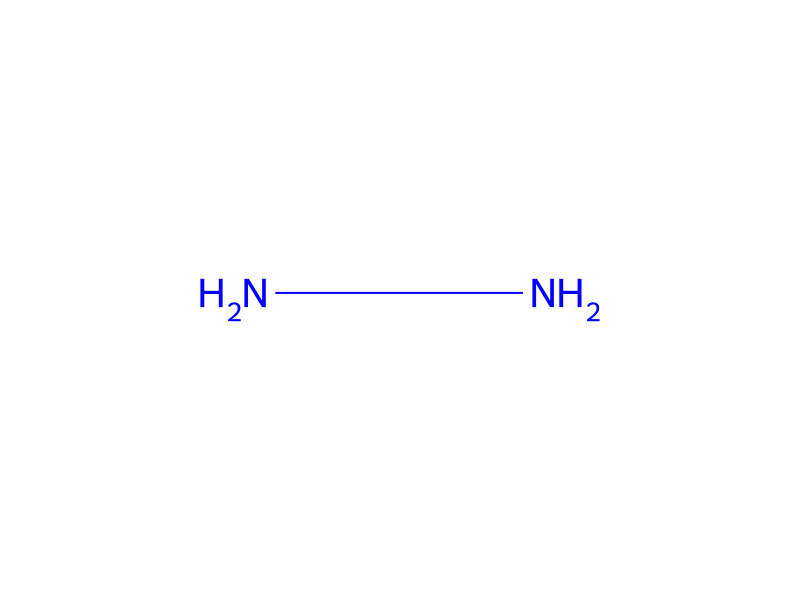
HCID 313Hydrochloric AcidHCID 7268Diethyl OxalateHCID 9321HydrazineHCID 11615157(1R,5S)-bicyclo[3.1.0]hexan-2-oneHCID 23665647Potassium tert-butoxide

Produkt 1

HCID 58906803Ethyl (4AR,5AR)-4,4A,5,5A-tetrahydro-1H-cyclopropa[4,5]cyclopenta[1,2-C]pyrazole-3-carboxylate
Ausbeute 17,8 %

Reagenzien, Katalysatoren, Lösungsmittel 1

HCID 702EthanolLösungsmittel

Reaktionsbedingungen

Temperatur
70 °C

Versuchsvorschrift

(1R,5S)-Bicyclo[3.1.0]hexan-2-one (1.000 g, 10.40 mmol) was taken up in ethanol (40 mL) and potassium tert-butoxide (1.0 M in THF) (13.00 mL, 13.00 mmol) was added, followed by diethyl oxalate (1.413 mL, 10.40 mmol). The resulting solution was heated and stirred for 1 h at 70° C. Hydrazine (10.40 mL, 10.40 mmol) was then added, followed by hydrochloric acid (ca 3 M aqueous) (10.40 mL, 31.2 mmol). The solution was stirred at 70° C. for 1 h and purified by HPLC to give the title compound (356 mg, 1.852 mmol, 17.80% yield) as a solid. LCMS m/z=193.3 [M+H]+.

Aufarbeitung

  1. temperatureThe resulting solution was heated
  2. stirringThe solution was stirred at 70° C. for 1 h
  3. custompurified by HPLC

Quellen und Nachweise

ORD-Eintrag
ord-b0669d0a1ba94091b5b604e055ddcd02
Quelldatensatz
uspto-grants-2014_07
DOI
10.6084/m9.figshare.5104873.v1
Patentnummer
US08778950B2

Notizen zur Reaktion

Auf dieser SeiteKomponentenReaktionsbedingungenVersuchsvorschriftAufarbeitungQuellen und NachweiseNotizen zur Reaktion