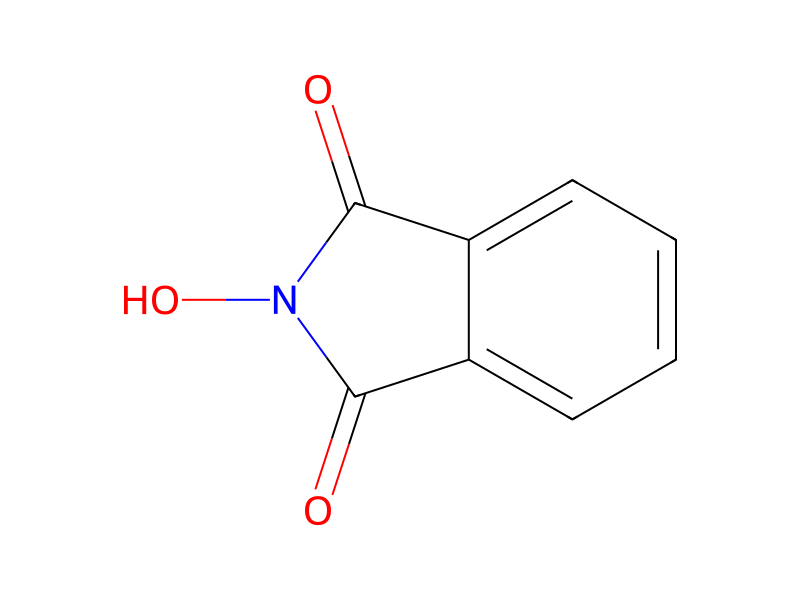
[OH:1][N:2]1[C:6](=[O:7])[C:5]2=[CH:8][CH:9]=[CH:10][CH:11]=[C:4]2[C:3]1=[O:12].C(=O)([O-])[O-].[K+].[K+].[F:19][C:20]1[C:25]([CH2:26]Br)=[C:24]([F:28])[C:23]([F:29])=[C:22]([F:30])[C:21]=1[F:31]>C(COC)OC.CS(C)=O>[F:19][C:20]1[C:25]([CH2:26][O:1][N:2]2[C:3](=[O:12])[C:4]3=[CH:11][CH:10]=[CH:9][CH:8]=[C:5]3[C:6]2=[O:7])=[C:24]([F:28])[C:23]([F:29])=[C:22]([F:30])[C:21]=1[F:31]N-hydroxyphthalimide (8.15 g, 0.05 mol) was dissolved in a mixture of dry dimethoxyethane (40 ml) and dry dimethyl sulphoxide (10 ml). To this solution was added, in one portion, potassium carbonate (3.46 g, 0.05 mol). An orange suspension resulted. The pentafluorobenzyl bromide (10.8 g, 0.05 mol) in dry dimethoxyethane (10 ml) was added dropwise over 1 h at room temperature. The reaction mixture was stirred at room temperature for 64 h and then quenched by pouring into water (1 l). The resulting slurry was filtered, the crystals washed with water and dried in vacuo to give N-(pentafluorobenzyloxy)phthalimide as white crystals (15.9)g.