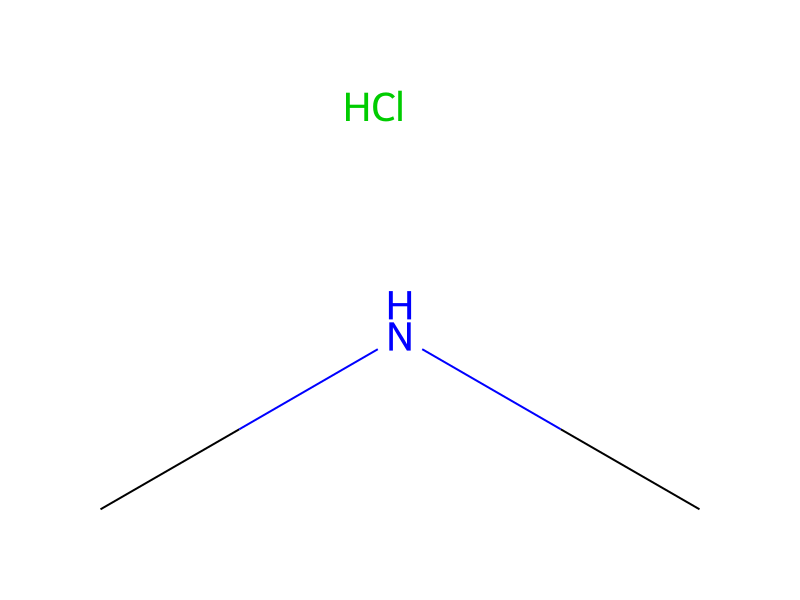
[CH:1]([CH:3]([C:9]1[CH:14]=[CH:13][C:12]([O:15][CH3:16])=[CH:11][CH:10]=1)[C:4]([O:6][CH2:7][CH3:8])=[O:5])=O.Cl.[CH3:18][NH:19][CH3:20].C(=O)([O-])[O-].[K+].[K+]>C(O)C>[CH3:16][O:15][C:12]1[CH:13]=[CH:14][C:9]([C:3](=[CH:1][N:19]([CH3:20])[CH3:18])[C:4]([O:6][CH2:7][CH3:8])=[O:5])=[CH:10][CH:11]=121 g (0.0945 mol) of ethyl α-formyl-p-methoxyphenylacetate, 80 ml of ethanol and 31,1 g (0.38 mol) of dimethylamine hydrochloride were mixed in a 250 ml balloon flask provided with magnetic stirring and thermometer under a gentle nitrogen flow. Subsequently 7.4 g (0.054 mol) of potassium carbonate were added. The thus obtained solution was stirred at room temperature for 3 days. The solvent was evaporated to dryness in the rotary evaporator and 120 ml of water were added over the thus obtained solid residue. The pH was adjusted to 5-6 with 5N hydrochloric acid and the product of the aqueous phase was extracted with 2×80 ml of dichloromethane. The organic extracts were dried with sodium sulfate and the solvent was removed under vacuum, to give a residue weighing 23.26 g and solidifying at room temperature (Yield: 98.7%)