Reaktionsgleichung

[Cl:1][C:2]1[CH:7]=[CH:6][C:5](B(O)O)=[CH:4][CH:3]=1.Br[C:12]1[CH:17]=[CH:16][N:15]=[CH:14][CH:13]=1.C(=O)([O-])[O-].[K+].[K+]>C1C=CC(P(C2C=CC=CC=2)C2C=CC=CC=2)=CC=1.C1C=CC(P(C2C=CC=CC=2)C2C=CC=CC=2)=CC=1.C1C=CC(P(C2C=CC=CC=2)C2C=CC=CC=2)=CC=1.C1C=CC(P(C2C=CC=CC=2)C2C=CC=CC=2)=CC=1.[Pd].O1CCCC1>[Cl:1][C:2]1[CH:7]=[CH:6][C:5]([C:12]2[CH:17]=[CH:16][N:15]=[CH:14][CH:13]=2)=[CH:4][CH:3]=1Komponenten
6





Reaktionsbedingungen
- Temperatur
- 80 °C
Versuchsvorschrift
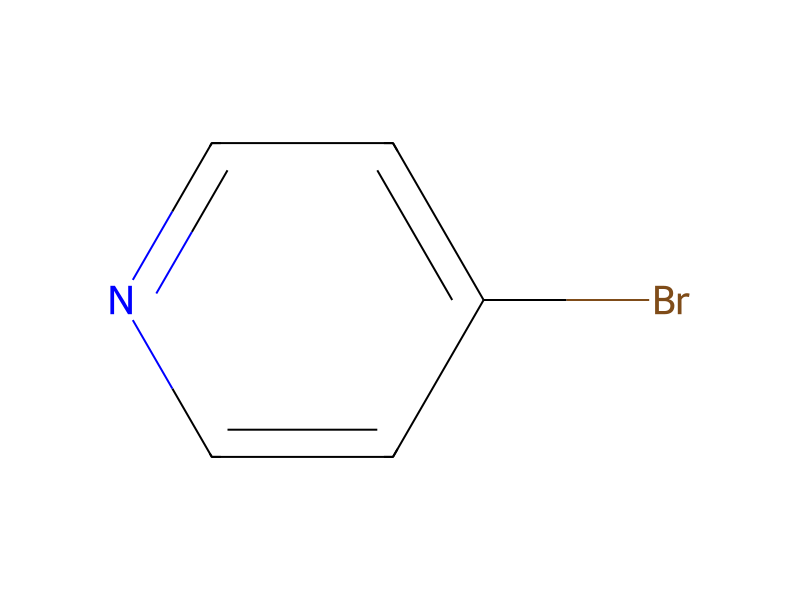
This Example was carried out in the same manner as Example 1, except that 5.0 g (0.032 mol) of 4-chloro-phenyl boronic acid, 10.0 g (0.064 mol) of 4-bromopyridine, 150□ of tetrahydrofuran and 2M potassium carbonate solution (20□) were added and then 0.37 g (3 mol %) of palladium tetrakistriphenylphosphine [(pd(PPh3)4] was used as a catalyst. Finally, after the resulting solution was heated to reflux at 80° C. for 24 hours, the 4-(4-chloro-phenyl)pyridine was isolated. The yield was 60%.
Aufarbeitung
- additionwere added
- temperatureFinally, after the resulting solution was heated
Quellen und Nachweise
- ORD-Eintrag
- ord-e5c9e9945b5945d2ac64b749e24a7763
- Quelldatensatz
- uspto-grants-2012_02
- Patentnummer
- US08110642B2
Verknüpfte Notizen
Wird geladen…