StartseiteMCPWorkbenchSkills
StartseiteWorkbenchBenachrichtigungenMein Bereich
llms.txt · MCP-AnleitungDatenschutz · Nutzungsbedingungen · Supportv1.8.3
  1. Startseite
  2. /Reaktion

Potassium Carbonate → 1,4-Dihydro-2,3-benzoxathiin-3-oxide

HRID 1643494
Drucken

Reaktionsgleichung

Reaktionsgleichung von HRID 1643494
O[CH2:2][S:3]([O-:5])=[O:4].[Na+].Cl[C:8]1[C:9](Cl)=[C:10]([CH3:15])[C:11](C)=[CH:12][CH:13]=1.C(=O)([O-])[O-].[K+].[K+].C(OCC)(=O)C.CCCCCC>CS(C)=O.CO.C(OCC)(=O)C.[I-].[Na+]>[CH2:15]1[C:10]2[CH:11]=[CH:12][CH:13]=[CH:8][C:9]=2[CH2:2][S:3](=[O:4])[O:5]1
KomponentenVersuchsvorschriftAufarbeitungQuellen und NachweiseNotizen zur Reaktion

Komponenten

8

Edukt 4

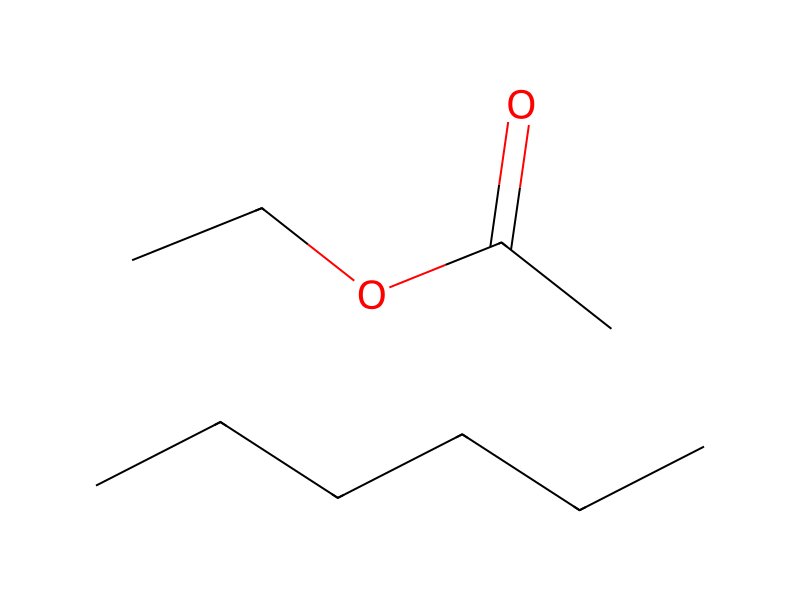
HCID 11430Potassium CarbonateHCID 185652Benzene, 1,2-dichloro-3,4-dimethyl-HCID 21226206Ethyl acetate hexaneHCID 23689980Sodium Formaldehyde Sulfoxylate

Produkt 1

HCID 118298361,4-Dihydro-2,3-benzoxathiin-3-oxideAusbeute 127 %

Reagenzien, Katalysatoren, Lösungsmittel 3

HCID 5238
Sodium Iodide
Katalysator
HCID 679Dimethyl SulfoxideLösungsmittel2×
HCID 21584119Ethylacetate methanolLösungsmittel

Versuchsvorschrift

Sodium hydroxymethanesulfinate (Rongalite™) (180 g; 1.17 mol) was suspended in DMSO (400 mL) and left to stir for 10 min. before dichloro-o-xylene (102.5 g; 0.59 mol), potassium carbonate (121.4 g; 0.88 mol) and sodium iodide (1.1 g; 7 mmol) were added consecutively. More DMSO (112 mL) was used to rinse residual materials into the reaction mixture before the whole was allowed to stir at room temperature. The initial endothermic reaction became mildly exothermic after around 1 h causing the internal temperature to rise to ca. 32-33° C. The reaction was followed by TLC (ethyl acetate/hexane, 50:50) and found to be complete after 3 h. The reaction mixture was diluted with methanol/ethyl acetate (20:80; 400 mL) and the solids were filtered off, and washed with more methanol/ethyl acetate (20:80; 100 mL, 2×50 mL). The filtrate was transferred to a separating funnel and brine (1 L) was added. This caused more sodium chloride from the product mixture to precipitate out. The addition of water (200 mL) redissolved the sodium chloride. The mixture was shaken and the organic layer was separated and then the aqueous layer was extracted further with methanol/ethyl acetate (20:80; 200 mL, 150 mL, 250 mL). The combined extracts were dried (Na2SO4) and rotary evaporated (bath 37-38° C.). More solvent was removed under high vacuum to give the sultine 10 as a pale orange liquid (126 g) that was found by 1H NMR spectroscopy to be relatively free of by-product but containing residual DMSO and ethyl acetate (FIG. 1).


Aufarbeitung

  1. waitleft
  2. additionwere added consecutively
  3. washto rinse residual materials into the reaction mixture before the whole
  4. customThe initial endothermic reaction
  5. customto rise to ca. 32-33° C
  6. waitto be complete after 3 h
  7. filtrationthe solids were filtered off
  8. washwashed with more methanol/ethyl acetate (20:80; 100 mL, 2×50 mL)
  9. customThe filtrate was transferred to a separating funnel
  10. additionbrine (1 L) was added
  11. customto precipitate out
  12. additionThe addition of water (200 mL)
  13. dissolutionredissolved the sodium chloride
  14. stirringThe mixture was shaken
  15. customthe organic layer was separated
  16. extractionthe aqueous layer was extracted further with methanol/ethyl acetate (20:80; 200 mL, 150 mL, 250 mL)
  17. dry with materialThe combined extracts were dried (Na2SO4)
  18. customrotary evaporated (bath 37-38° C.)
  19. customMore solvent was removed under high vacuum

Quellen und Nachweise

ORD-Eintrag
ord-874628d4b7f647b3a616e8c90afee233
Quelldatensatz
uspto-grants-2012_02
DOI
10.6084/m9.figshare.5104873.v1
Patentnummer
US08119820B2

Notizen zur Reaktion

Auf dieser SeiteKomponentenVersuchsvorschriftAufarbeitungQuellen und NachweiseNotizen zur Reaktion