StartseiteMCPWorkbenchSkills
StartseiteWorkbenchBenachrichtigungenMein Bereich
llms.txt · MCP-AnleitungDatenschutz · Nutzungsbedingungen · Supportv1.8.0
  1. Startseite
  2. /Reaktion

Ethyl Thioglycolate → 4-Isobutyl-3-methylthiophene-2-carboxylic acid

HRID 1676107
Notizen
Druckvorschau

Reaktionsgleichung

Reaktionsgleichung von HRID 1676107
CC([O-])(C)C.[K+].C([O:9][C:10](=[O:13])[CH2:11][SH:12])C.Cl[CH:15]=[C:16]([CH2:20][CH:21]([CH3:23])[CH3:22])[C:17](=O)[CH3:18].CC[O-].[Na+]>C1COCC1.C(O)C>[CH2:20]([C:16]1[C:17]([CH3:18])=[C:11]([C:10]([OH:9])=[O:13])[S:12][CH:15]=1)[CH:21]([CH3:23])[CH3:22]
KomponentenReaktionsbedingungenVersuchsvorschriftAufarbeitungQuellen und NachweiseNotizen zur Reaktion

Komponenten

7

Edukt 4

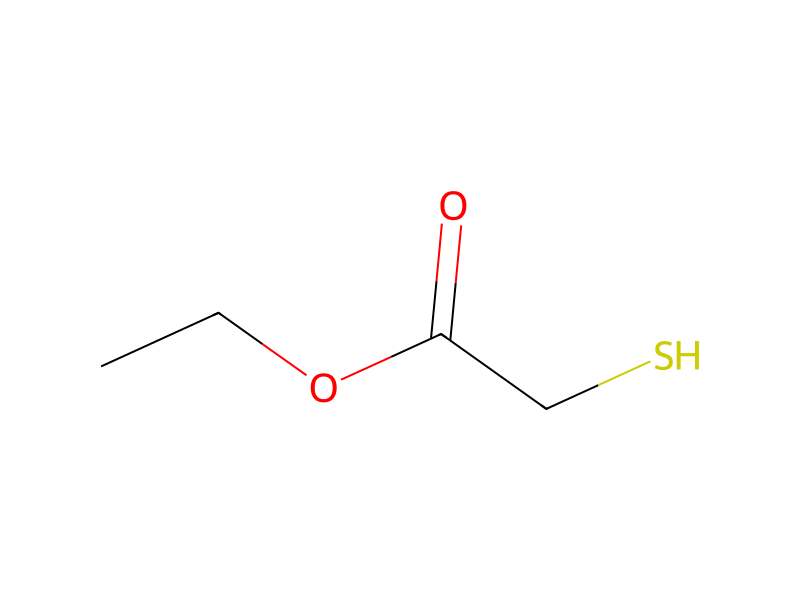
HCID 12185Ethyl ThioglycolateHCID 2723922Sodium ethoxideHCID 23665647Potassium tert-butoxide2×HCID 866457664-Chloro-3-isobutyl-but-3-en-2-one

Produkt 1

HCID 594978694-Isobutyl-3-methylthiophene-2-carboxylic acidAusbeute 41 %

Reagenzien, Katalysatoren, Lösungsmittel 2

HCID 702
Ethanol
Lösungsmittel
HCID 8028TetrahydrofuranLösungsmittel

Reaktionsbedingungen

Temperatur
20 °C

Versuchsvorschrift

KOtBu (44.2 g, 394 mmol) is added portionwise to ethanol (200 mL). The mixture is stirred for 30 min at 20° C. to dissolve all KOtBu. Mercapto-acetic acid ethyl ester (47.3 g, 394 mmol) is added and the temperature is maintained at 20° C. This solution is slowly added at 20° C. to a solution of the crude 4-chloro-3-isobutyl-but-3-en-2-one (31.6 g, 197 mmol) in THF (350 mL). The mixture is stirred at rt for 15 h before sodium ethylate (13.4 g, 197 mmol) is added and stirring is continued at reflux for 1 h. The mixture is cooled to rt, and the solvents are evaporated on a rotavap. The residue is diluted with diethyl ether (500 mL), washed with 1 M aq. NaH2PO4 (200 mL), 1 N aq. NaOH (2×100 mL), sat. aq. NaHCO3 (35 mL) containing 10% aq. NaOCl (15 mL) and brine (100 mL), dried over Na2SO4, filtered and evaporated. The resulting residue (36.3 g) is dissolved in EtOH (250 mL), 2 N aq. LiOH (100 mL) is added, and the mixture is stirred at rt for 48 h before it is extracted with diethyl ether (1×400 mL, 2×150 mL). The organic extracts are washed with 1 N aq. NaOH (3×100 mL). The aq. extracts are carefully acidified with 25% aq. HCl and then extracted with DCM (3×150 mL). The combined DCM extracts are dried over MgSO4, filtered and evaporated. The crude product is purified by crystallisation from acetonitrile (150 mL) at 4° C. to give 4-isobutyl-3-methyl-thiophene-2-carboxylic acid (16.0 g) as a beige-brown crystalline powder; LC-MS: tR=0.95 min; 1H NMR (CD3OD): δ 7.21 (s, 1H), 2.43 (s, 3H), 2.42 (d, J=7.0 Hz, 2H), 1.83 (m, J=7.0 Hz, 1H), 0.92 (d, J=7.0 Hz, 6H).

Aufarbeitung

  1. temperaturethe temperature is maintained at 20° C
  2. additionis added
  3. stirringstirring
  4. temperatureat reflux for 1 h
  5. temperatureThe mixture is cooled to rt
  6. customthe solvents are evaporated on a rotavap
  7. additionThe residue is diluted with diethyl ether (500 mL)
  8. washwashed with 1 M aq. NaH2PO4 (200 mL), 1 N aq. NaOH (2×100 mL), sat. aq. NaHCO3 (35 mL)
  9. additioncontaining 10% aq. NaOCl (15 mL) and brine (100 mL)
  10. dry with materialdried over Na2SO4
  11. filtrationfiltered
  12. customevaporated
  13. dissolutionThe resulting residue (36.3 g) is dissolved in EtOH (250 mL)
  14. addition2 N aq. LiOH (100 mL) is added
  15. stirringthe mixture is stirred at rt for 48 h before it
  16. extractionis extracted with diethyl ether (1×400 mL, 2×150 mL)
  17. washThe organic extracts are washed with 1 N aq. NaOH (3×100 mL)
  18. extractionextracted with DCM (3×150 mL)
  19. dry with materialThe combined DCM extracts are dried over MgSO4
  20. filtrationfiltered
  21. customevaporated
  22. customThe crude product is purified by crystallisation from acetonitrile (150 mL) at 4° C.

Quellen und Nachweise

ORD-Eintrag
ord-f0e2750bd8644020a00e0aa1af39fecd
Quelldatensatz
uspto-grants-2011_08
DOI
10.6084/m9.figshare.5104873.v1
Patentnummer
US08003800B2

Notizen zur Reaktion

Wird geladen…

Auf dieser SeiteKomponentenReaktionsbedingungenVersuchsvorschriftAufarbeitungQuellen und NachweiseNotizen zur Reaktion



