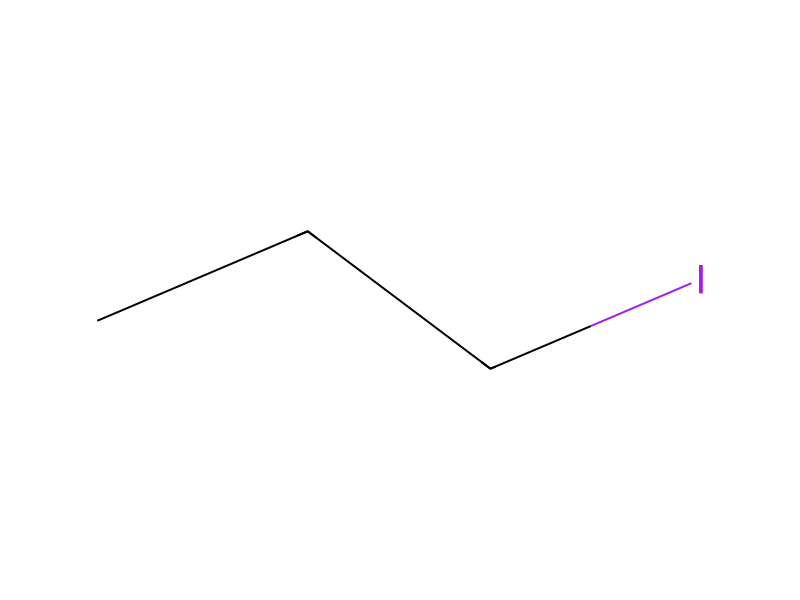
[Cl:1][C:2]1[N:3]=[CH:4][C:5]2[NH:11][C:10](=[O:12])[C:9]([F:14])([F:13])[CH2:8][N:7]([CH:15]3[CH2:19][CH2:18][CH2:17][CH2:16]3)[C:6]=2[N:20]=1.CN(C)C=O.C(=O)([O-])[O-].[Cs+].[Cs+].I[CH2:33][CH2:34][CH3:35]>O>[Cl:1][C:2]1[N:3]=[CH:4][C:5]2[N:11]([CH2:33][CH2:34][CH3:35])[C:10](=[O:12])[C:9]([F:14])([F:13])[CH2:8][N:7]([CH:15]3[CH2:19][CH2:18][CH2:17][CH2:16]3)[C:6]=2[N:20]=1To a stirred solution of 1.0 g (0.0033 mole) of 2-chloro-9-cyclopentyl-7,7-difluoro-5,7,8,9-tetrahydro-pyrimido[4,5-b][1,4]diazepin-6-one (VI-20) and 10 mL of dimethylformamide was added 3.23 g (0.0099 mole) cesium carbonate followed by 0.8 mL (0.0099 mole) of 1-iodopropane. The mixture was stirred at room temperature for 18 hours, then water was added. After 15 minutes, the mixture was extracted with ethyl acetate. The organic layer was washed with water, 5% aqueous sodium metabisulfite solution and then brine. The aqueous layers were reextracted with ethyl acetate. The combined organic layers were dried over anhydrous magnesium sulfate, filtered, and concentrated under reduced pressure. The residue was recrystallized from hexanes-dichloromethane to give 1.0 g of 2-Chloro-9-cyclopentyl-7,7-difluoro-5-propyl-5,7,8,9-tetrahydro-pyrimido[4,5-b][1,4]diazepin-6-one (VII-144) as white crystals.