StartseiteMCPWorkbenchSkills
StartseiteWorkbenchBenachrichtigungenMein Bereich
llms.txt · MCP-AnleitungDatenschutz · Nutzungsbedingungen · Supportv1.8.3
  1. Startseite
  2. /Reaktion

Methanol → 2-(1H-Imidazol-1-yl-methoxy)-1H-isoindole-1,3(2H) dione

HRID 1679882
Drucken

Reaktionsgleichung

Reaktionsgleichung von HRID 1679882
[Na].[OH:2][N:3]1[C:7](=[O:8])[C:6]2=[CH:9][CH:10]=[CH:11][CH:12]=[C:5]2[C:4]1=[O:13].Cl.ClC[C:17]1[NH:18][CH:19]=[CH:20][N:21]=1.[CH3:22]O>>[N:21]1([CH2:22][O:2][N:3]2[C:4](=[O:13])[C:5]3[C:6](=[CH:9][CH:10]=[CH:11][CH:12]=3)[C:7]2=[O:8])[CH:20]=[CH:19][N:18]=[CH:17]1
KomponentenVersuchsvorschriftAufarbeitungQuellen und NachweiseNotizen zur Reaktion

Komponenten

5

Edukt 4

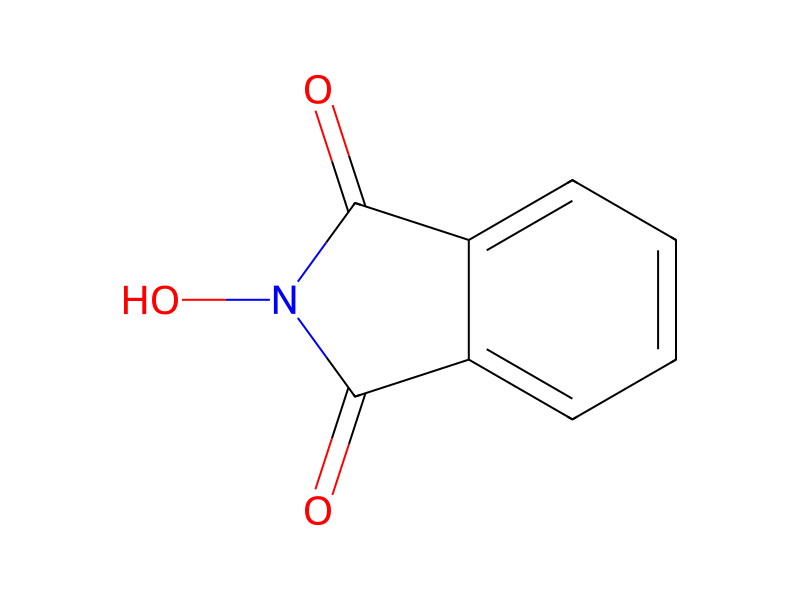
HCID 887MethanolHCID 10665N-HydroxyphthalimideHCID 27609292-(Chloromethyl)-1H-imidazole hydrochlorideHCID 5360545Sodium

Produkt 1

HCID 234582522-(1H-Imidazol-1-yl-methoxy)-1H-isoindole-1,3(2H) dione

Versuchsvorschrift

5.1 g sodium salt of N-hydroxyphthalimide and 1.9 g 2-chloromethyl imidazole hydrochloride (Journal of Chem. Soc. 1965,4577) are stirred at room temperature in dry methanol for 2 hours. The solvent is distilled off in vacuo and the residue treated with aqueous sodium bicarbonate and extracted 3 to 4 times with chloroform. The combined organic layers are dried over sodium sulfate, filtered and evaporated to dryness 1.7 g of 2-(1H-Imidazol-1-yl-methoxy)-1H-isoindole-1,3(2H)dione remains as crystalline solid with a melting point of 158°-160° C.

Aufarbeitung

  1. distillationThe solvent is distilled off in vacuo
  2. additionthe residue treated with aqueous sodium bicarbonate
  3. extractionextracted 3 to 4 times with chloroform
  4. dry with materialThe combined organic layers are dried over sodium sulfate
  5. filtrationfiltered
  6. customevaporated to dryness 1.7 g of 2-(1H-Imidazol-1-yl-methoxy)-1H-isoindole-1,3(2H)dione

Quellen und Nachweise

ORD-Eintrag
ord-35bdda1b8a214021a33450190a9a0487
Quelldatensatz
uspto-grants-1981_06
DOI
10.6084/m9.figshare.5104873.v1
Patentnummer
US04271157

Notizen zur Reaktion

Auf dieser SeiteKomponentenVersuchsvorschriftAufarbeitungQuellen und NachweiseNotizen zur Reaktion