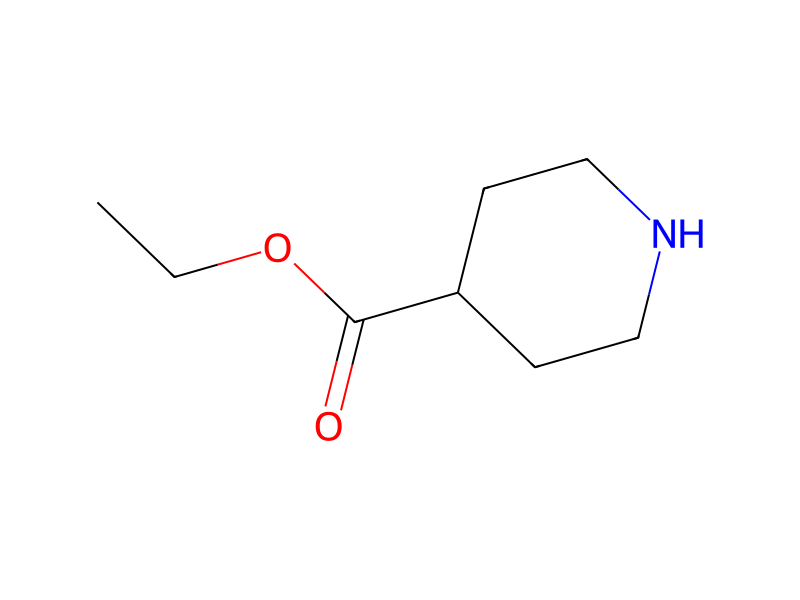
[NH:1]1[CH2:6][CH2:5][CH:4]([C:7]([O:9][CH2:10][CH3:11])=[O:8])[CH2:3][CH2:2]1.C=O.[F:14][C:15]1[CH:23]=[CH:22][CH:21]=[C:20]2[C:16]=1[CH:17]=[CH:18][NH:19]2.[C:24](=O)(O)[O-].[Na+]>O1CCOCC1.C(O)(=O)C>[F:14][C:15]1[CH:23]=[CH:22][CH:21]=[C:20]2[C:16]=1[C:17]([CH2:24][N:1]1[CH2:6][CH2:5][CH:4]([C:7]([O:9][CH2:10][CH3:11])=[O:8])[CH2:3][CH2:2]1)=[CH:18][NH:19]2A stirred solution of 1.8 grams (0.011 mole) of ethyl piperidin-4-ylcarboxylate in 10 mL of dioxane was cooled to 0° C., and 10 mL of acetic acid, followed by 0.9 mL of aqueous 37% formaldehyde were added. To this was then slowly added a solution of 1.5 grams (0.011 mole) of 4-fluoroindole in 10 mL of dioxane. Upon completion of the addition, the reaction mixture was allowed to warm to ambient temperature where it stirred for about five hours. After this time the reaction mixture was again cooled to 0° C., and neutralized with an aqueous solution saturated with sodium bicarbonate. The mixture was extracted with two 100 mL portions of diethyl ether. The combined extracts were washed with an aqueous solution saturated with sodium chloride, dried with sodium sulfate, and filtered. The filtrate was then passed through a pad of silica gel. The eluate was concentrated under reduced pressure, yielding 1.2 grams of ethyl N-(4-fluoroindol-3-ylmethyl)piperidin-4-ylcarboxylate, mp 96°-105° C. The NMR spectrum was consistent with the proposed structure.