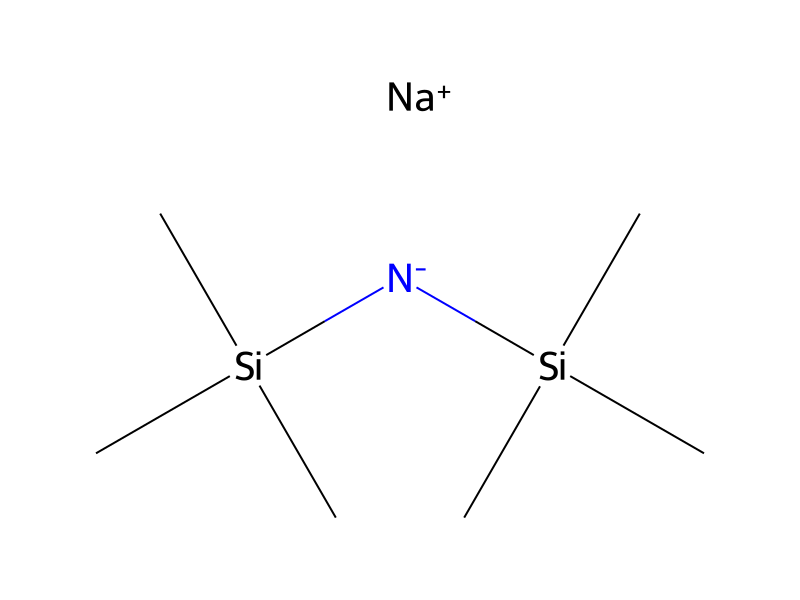
[Cl-].[CH3:2][O:3][CH2:4][P+](C1C=CC=CC=1)(C1C=CC=CC=1)C1C=CC=CC=1.C[Si](C)(C)[N-][Si](C)(C)C.[Na+].[CH3:34][C:35]1([CH3:53])[CH:44]([N:45]2[C:49]([CH:50]=O)=[CH:48][N:47]=[CH:46]2)[C:43]2[C:38](=[CH:39][CH:40]=[CH:41][CH:42]=2)[C:37](=[O:52])[O:36]1>C1COCC1>[CH3:2][O:3][CH:4]=[CH:50][C:49]1[N:45]([CH:44]2[C:43]3[C:38](=[CH:39][CH:40]=[CH:41][CH:42]=3)[C:37](=[O:52])[O:36][C:35]2([CH3:53])[CH3:34])[CH:46]=[N:47][CH:48]=1To a solution of methoxymethyltriphenylphosphonium chloride (0.974 g, 2.84 mmol) in THF (10 mL) at −78° C. is added sodium hexamethyldisilazide (1M in THF, 3.0 mL, 3.09 mmol) and the mixture is stirred at −78° C. for 1 h. 3-(3,3-dimethyl-1-oxo-isochroman-4-yl)-3H-imidazole-4-carbaldehyde (0.10 g, 0.37 mmol) (Example 9a) in THF (0.2 mL) is then added at −78° C. and the mixture is stirred at ambient temperature overnight. It is then quenched with water and extracted with ethyl acetate. The organic phase is concentrated in vacuo. The residue is purified using by semi-preparative reverse phase HPLC to afford 4-[5-(2-methoxy-vinyl)-imidazole-1-yl]-3,3-dimethyl-isochroman-1-one; 1H NMR (400 MHz, CHLOROFORM-d) δ ppm 1.31 (s, 3 H), 1.52 (s, 3 H), 3.75 (br. s, 3 H), 5.22 (s, 1 H), 5.31 (s, 1 H), 5.55 (br. s, 1 H), 6.82 (br. s, 1 H), 6.96 (br. s, 1 H), 7.16 (d, J=7.6 Hz, 1 H), 7.55 (td, J=7.6, 1.3 Hz, 1 H), 7.63 (td, J=7.6, 1.3 Hz, 1 H), 8.24 (dd, J=7.7, 1.4 Hz, 1 H).