Ethanol → 3-Chloro-4,5-dipropargyloxybenzoic acid
HRID 1708980
Reaktionsgleichung

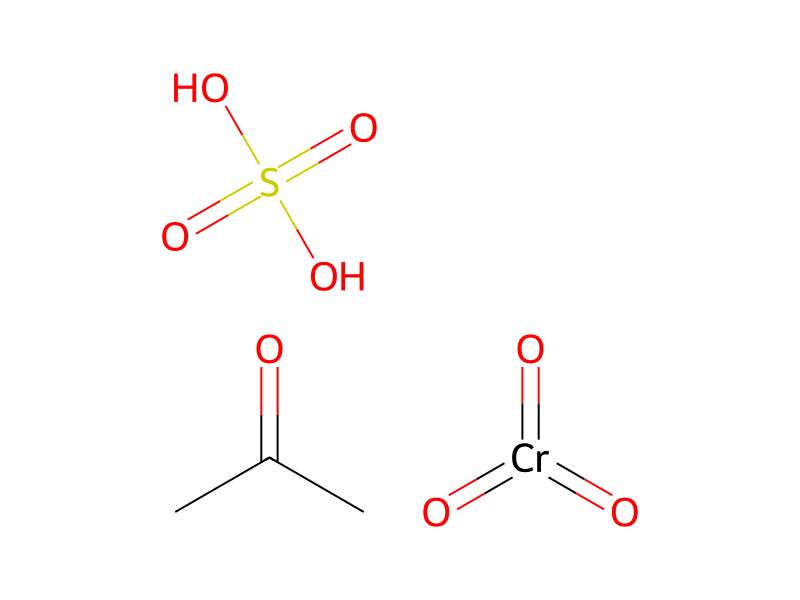
CC(C)=[O:3].OS(O)(=O)=O.O=[Cr](=O)=O.S(=O)(=O)(O)O.[Cl:19][C:20]1[CH:21]=[C:22]([CH:25]=[C:26]([O:32][CH2:33][C:34]#[CH:35])[C:27]=1[O:28][CH2:29][C:30]#[CH:31])[CH:23]=[O:24].C(O)C>CC(C)=O.[O-2].[O-2].[O-2].[Cr+6]>[Cl:19][C:20]1[CH:21]=[C:22]([CH:25]=[C:26]([O:32][CH2:33][C:34]#[CH:35])[C:27]=1[O:28][CH2:29][C:30]#[CH:31])[C:23]([OH:3])=[O:24]Komponenten
7
Edukt 4



Produkt 1

Reagenzien, Katalysatoren, Lösungsmittel 2

