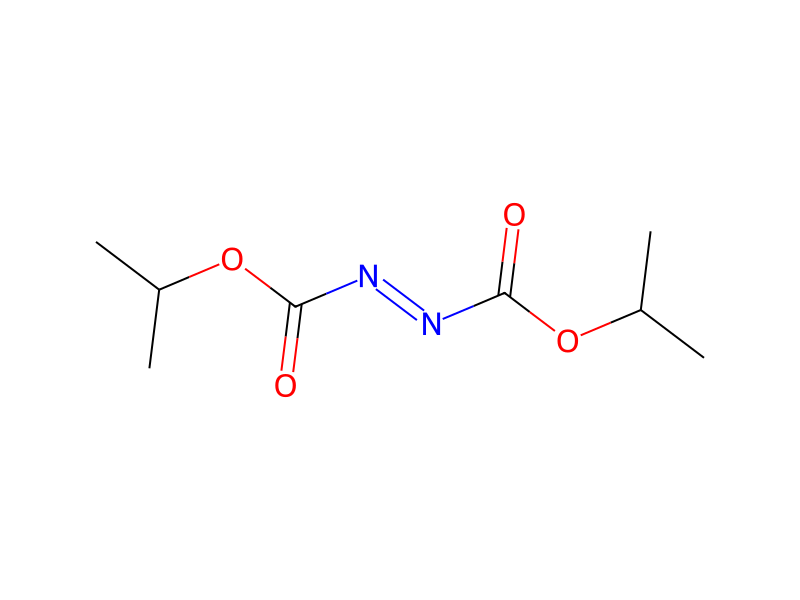
To a solution 3-(6-hydroxy-1,3-benzodioxol-5-yl)-3-(hydroxymethyl)-1-pentyl-1,3-dihydro-2H-pyrrolo[3,2-b]pyridin-2-one (1.95 g, 4.70 mmol) in anhydrous tetrahydrofuran (30.0 mL) was added triphenylphosphine (2.06 g, 7.88 mmol) and diisopropyl azodicarboxylate (1.59 g, 7.88 mmol) at 0° C. The reaction mixture was stirred at ambient temperature for 16 h and quenched with saturated ammonium chloride (20.0 mL). After the solvent was removed under reduced pressure, the residue was diluted with ethyl acetate (30.0 mL). The organic layer was washed with brine (3×15.0 mL), dried over anhydrous sodium sulfate and filtered. The filtrate was concentrated in vacuo to dryness. The residue was subjected to silica gel column chromatography eluting with ethyl acetate/hexane (35%) to give 1.20 g of yellow solid, which was further purified on HPLC with a reverse phase column to afford the title compound (0.09 g, 8%) as a yellow solid: 1H NMR (300 MHz, CDCl3) δ 8.21 (dd, 1H), 7.21-7.12 (m, 2H), 6.50 (s, 1H), 6.07 (s, 1H), 5.83 (d, 1H), 4.88 (s, 2H), 3.88-3.78 (m, 1H), 3.70-3.60 (m, 1H), 1.75-1.65 (m, 2H), 1.37-1.32 (m, 4H), 0.89 (t, 3H); 13C NMR (75 MHz, CDCl3) δ 175.9, 156.4, 152.7, 149.1, 143.9, 142.3, 137.8, 123.4, 117.8, 114.9, 102.6, 101.5, 94.0, 78.3, 58.7, 40.2, 29.0, 27.0, 22.3, 14.0; MS (ES+) m/z 353.3 (M+1).