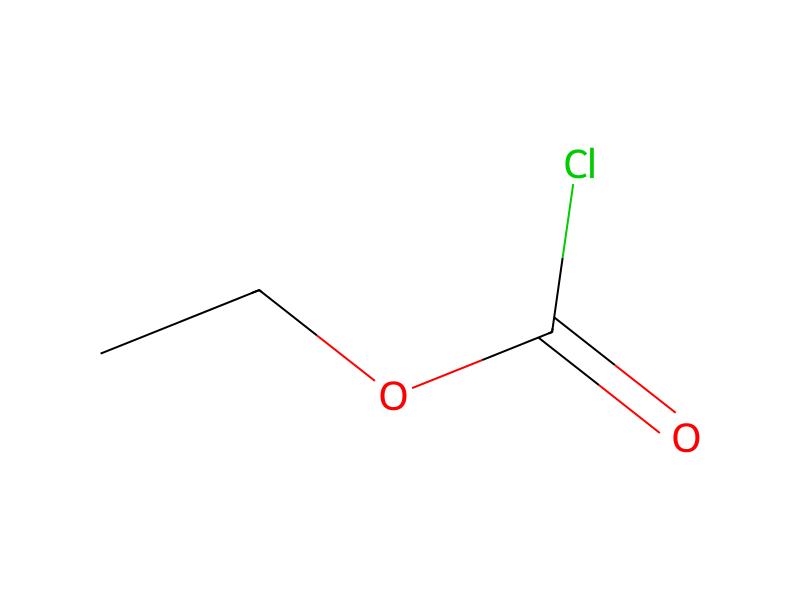
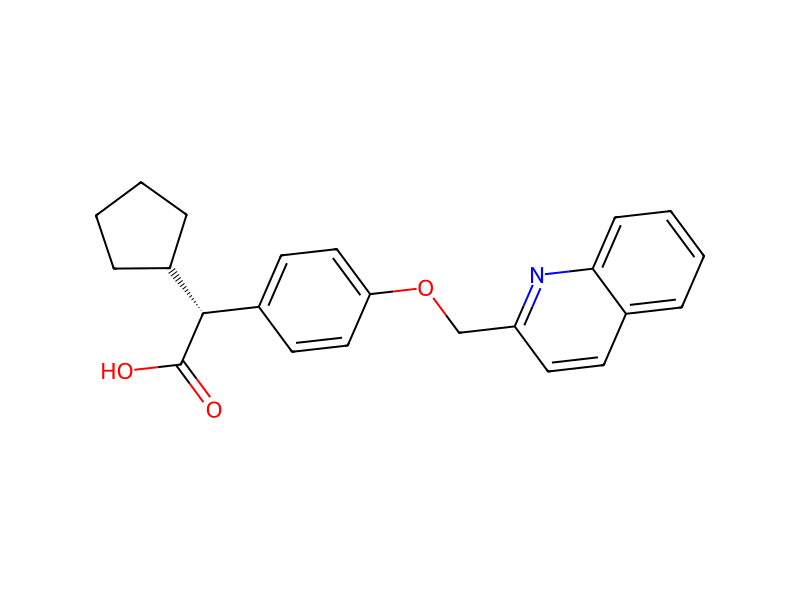
[CH:1]1([C@H:6]([C:10]2[CH:15]=[CH:14][C:13]([O:16][CH2:17][C:18]3[CH:27]=[CH:26][C:25]4[C:20](=[CH:21][CH:22]=[CH:23][CH:24]=4)[N:19]=3)=[CH:12][CH:11]=2)[C:7](O)=[O:8])[CH2:5][CH2:4][CH2:3][CH2:2]1.C(N(CC)CC)C.ClC(OCC)=O.[BH4-].[Na+]>C1COCC1.CO>[CH:1]1([C@H:6]([C:10]2[CH:15]=[CH:14][C:13]([O:16][CH2:17][C:18]3[CH:27]=[CH:26][C:25]4[C:20](=[CH:21][CH:22]=[CH:23][CH:24]=4)[N:19]=3)=[CH:12][CH:11]=2)[CH2:7][OH:8])[CH2:5][CH2:4][CH2:3][CH2:2]1To a solution of 2-(R)-cyclopentyl-2-(4-(2-quinolylmethoxy)phenyl)acetic acid (290 mg, 0.8 mmol), prepared as in step 4, and triethylamine (0.14 ml, 1.0 ml) in THF (35 ml) at -25° C. was added dropwise ethyl chloroformate (0.1 ml, 1.0 mmol). Upon completion of addition, the mixture was stirred for 15 min. and warmed to 0° C. Sodium borohydride (150 mg, 4.0 mmol) was added followed by very slow addition of methanol (15 ml). The reaction was quenched with saturated aqueous NH4Cl and extracted with ethyl acetate. The organic layer was washed with water and brine, dried over MgSO4, and concentrated in vacuo. The residue was chromatographed (silica gel, hexane-ethyl acetate 2:1) to afford 180 mg of 2-(R)-cyclopentyl-2-(4-(2-quinolylmethoxy)phenyl)ethan-1-ol.