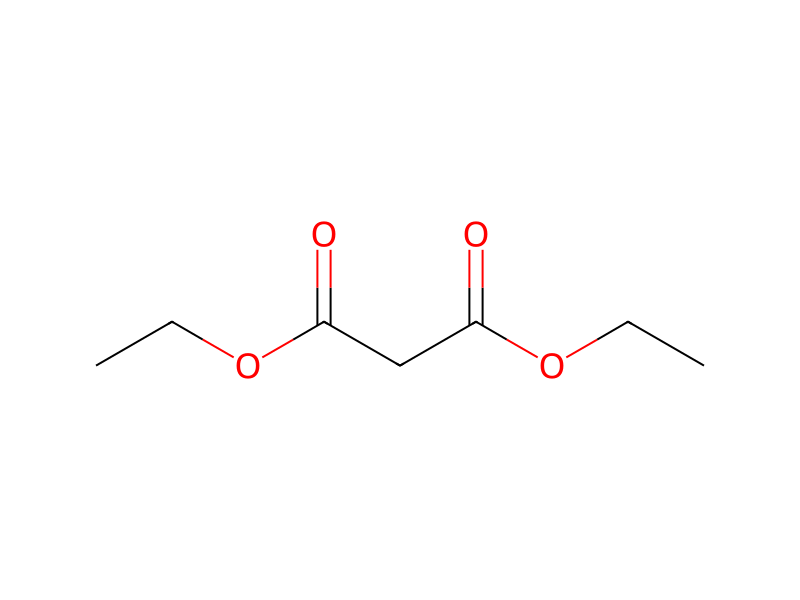
Charge a flask containing sodium hydride (17.45 g, 0.44 moles) with anhydrous dioxane (500 ml) while cooling at 0° C. Add diethyl malonate (69.88 g, 0.44 moles) dropwise over one hour. Upon reaching ambient temperature, add copper (I) bromide (62.59 g, 0.44 moles). Add 7-bromothieno[3,2-b]pyridine (18.68 g, 87.26 mmol) as a solution in dioxane (50 mL). Heat the reaction to reflux for 18 hours. Concentrate the reaction solution to ˜175 mL. Pour the concentrate into concentrated ammonium hydroxide (2.5 L). Extract the aqueous phase with ethyl acetate (6×300 mL). Wash the organic layers exhaustively with 2 N sodium hydroxide until the blue color dissipates. Treat the organic layers with magnesium sulfate, filter and concentrate. Purification on silica utilizing a solution of 1:1:3 of ether, ethyl acetate and hexane as eluent yields the desired compound (14.6 gm, 57%).