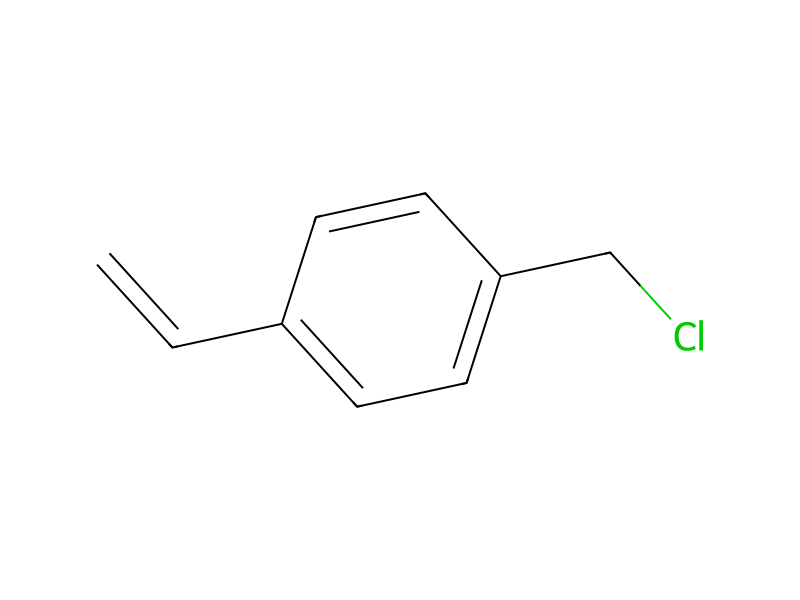
After 691.0 g (5.0 mole) of a 50% 2-propenyl alcohol solution of sodium 2-propenoxide, 16.0 g of tetrabutylammonium bromide and 1.0 g of BHT were placed and mixed in a 3-liter glass flask equipped with a stirrer, a reflux condenser, a thermometer and a dropping funnel, 763.0 g (5.0 mole) of 4-vinylbenzyl chloride was added dropwise to the mixture from the dropping funnel as the temperature was kept at 35°-40° C. to make them undergo the reaction. At the conclusion of the reaction, water was added to dissolve the produced salt. The resulting organic phase was separated, and then distilled to collect a 83°-84° C./2 mmHg fraction. Thus, 795.4 g of 3-(4-vinylbenzyloxy)-1-propene was obtained in a 91.3% yield.