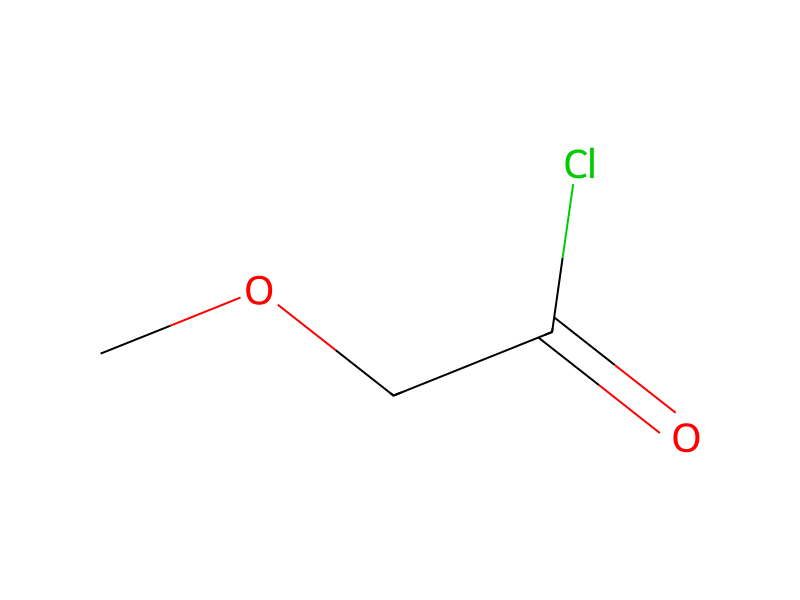
C(N(C(C)C)CC)(C)C.[NH2:10][C:11]1[C:16]([OH:17])=[C:15]([F:18])[C:14]([C:19]2[CH:24]=[CH:23][CH:22]=[CH:21][CH:20]=2)=[C:13]([CH3:25])[C:12]=1[C:26]#[N:27].[CH3:28][O:29][CH2:30][C:31](Cl)=[O:32].[Cl-].[NH4+]>C(OCC)(=O)C>[CH3:28][O:29][CH2:30][C:31]([O:17][C:16]1[C:15]([F:18])=[C:14]([C:19]2[CH:24]=[CH:23][CH:22]=[CH:21][CH:20]=2)[C:13]([CH3:25])=[C:12]([C:26]#[N:27])[C:11]=1[NH2:10])=[O:32]Diisopropylethylamine (0.64 ml, 3.7 mmol) was added to an ethyl acetate (8 ml) solution of 4-amino-3-cyano-6-fluoro-5-hydroxy-2-methylbiphenyl (I-41) (180 mg, 0.74 mmol), then with cooling with ice, methoxyacetyl chloride (0.17 ml, 1.85 mmol) was added, followed by stirring for 16 hours with gradually heating up to room temperature. Aqueous saturated ammonium chloride solution was added to the reaction liquid, followed by extraction three times with ethyl acetate, the organic layer was washed with saturated sodium bicarbonate water and saturated brine, then dried over anhydrous magnesium sulfate. After filtration and concentration under reduced pressure, the resulting residue was subjected to column chromatography, and the eluate with n-hexane:ethyl acetate (1:1) was concentrated under reduced pressure to obtain the entitled compound (229 mg, 99%) as a yellow solid.