Reaktionsgleichung

O.[C:2]([NH2:8])(=[O:7])[CH2:3][C:4]([CH3:6])=[O:5].C([O-])([O-])=O.[K+].[K+].[S:15](F)(F)(=[O:17])=[O:16]>CC(C)=O>[CH3:6][C:4]1[O:5][S:15](=[O:17])(=[O:16])[NH:8][C:2](=[O:7])[CH:3]=1Komponenten
Edukt 4


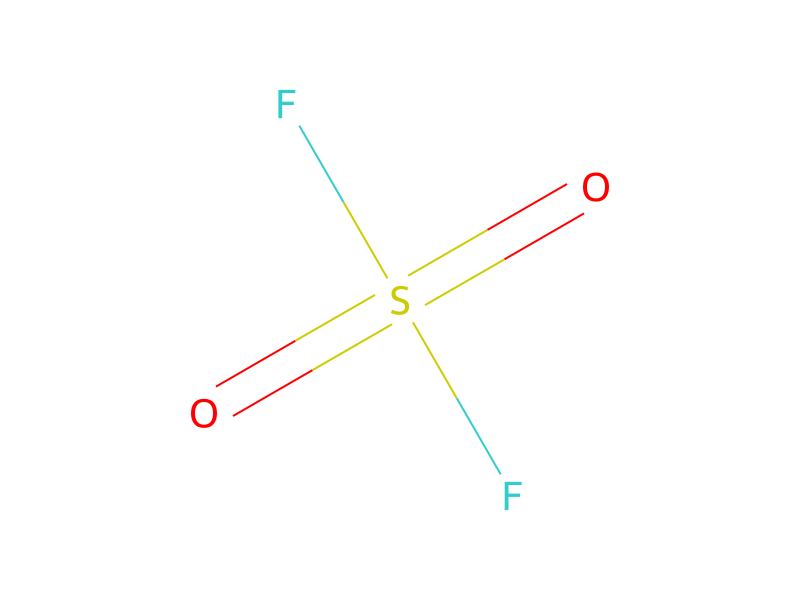

Produkt 1

Reagenzien, Katalysatoren, Lösungsmittel 1

Reaktionsbedingungen
- Temperatur
- 40 °C
Versuchsvorschrift
Different quantities of water were added to 150 ml of acetone. 10.1 g (0.1 mol) of acetoacetamide and 69 g (0.5 mol) of finely powdered, dry K2CO3 were added to each of these mixtures. 15.3 g (0.15 mol) of sulfuryl fluoride gas were then passed in--initially at room temperature. The temperature of the reaction mixture increased to about 40° C. during this process. The mixture was stirred for a further 2 hours and the product was filtered off with suction. The filter residue contained Acesulfam K, which was found to be identical to a reference sample by thin layer chromatography (silica gel, solvent system: ethyl acetate/glacial acetic acid 5:1). The filter residue was introduced into a mixture of excess hydrochloric acid with ice and extracted with ethyl acetate. The ethyl acetate extract was dried over Na2SO4 and evaporated in vacuo. Crystalline 6-methyl-3,4-dihydro-1,2,3-oxathiazin-4-one 2,2-dioxide was obtained and this was converted to Acesulfam K with methanolic KOH. The results are collated in the table which follows. In the last experiment listed in the table, the K2CO3 was used as a 50% aqueous solution.
Aufarbeitung
- custominitially at room temperature
- filtrationthe product was filtered off with suction
- additionThe filter residue was introduced into a mixture of excess hydrochloric acid with ice
- extractionextracted with ethyl acetate
- extractionThe ethyl acetate extract
- dry with materialwas dried over Na2SO4
- customevaporated in vacuo
Quellen und Nachweise
- ORD-Eintrag
- ord-33ff1ecc86574ef5813b5449befae66b
- Quelldatensatz
- uspto-grants-1986_11
- Patentnummer
- US04625024
Verknüpfte Notizen
Wird geladen…