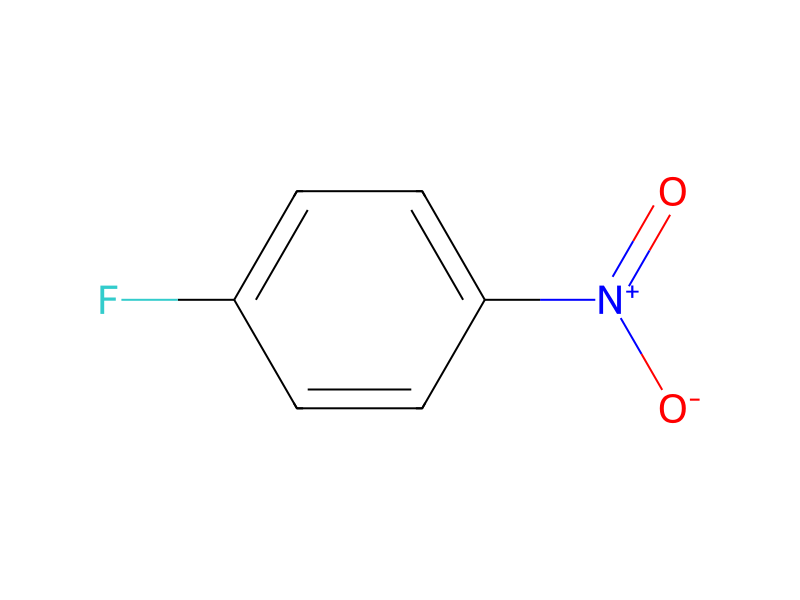
[OH:1][C:2]1[CH:7]=[CH:6][CH:5]=[CH:4][C:3]=1[C:8]1[CH:13]=[CH:12][CH:11]=[CH:10][C:9]=1[OH:14].[N+:15]([C:18]1[CH:23]=[CH:22][C:21](F)=[CH:20][CH:19]=1)([O-:17])=[O:16].[OH-:25].[K+]>CS(C)=O.O>[N+:15]([C:18]1[CH:23]=[CH:22][C:21]([O:1][C:2]2[CH:7]=[CH:6][CH:5]=[CH:4][C:3]=2[C:8]2[CH:13]=[CH:12][CH:11]=[CH:10][C:9]=2[O:14][C:21]2[CH:22]=[CH:23][C:18]([N+:15]([O-:16])=[O:25])=[CH:19][CH:20]=2)=[CH:20][CH:19]=1)([O-:17])=[O:16]18.62 g (0.1 mol) of 2,2'-dihydroxy-biphenyl and 28.22 g (0.2 mol) of p-nitrofluorobenzene are dissolved in 80 ml of dimethylsulphoxide in a sulphonation flask and the solution is warmed to 80° C. A solution of 13.2 g (0.2 mol) of 85% pure potassium hydroxide in 10 ml of water is then added dropwise, whilst stirring, and the reaction solution is subsequently further stirred for 3 hours at 100°-110° C. During this time a yellow precipitate forms and after the reaction mixture has cooled this is separated off by decanting off the supernatant liquor and is then washed several times with water. After drying, the crude product is recrystallised from ethanol. 32.86 g (77% of theory) of 2,2'-di-(p-nitrophenoxy)-biphenyl of analytical purity are obtained in the form of slightly yellowish crystals with a melting point of 158° C.
Wird geladen…