StartseiteMCPWorkbenchSkills
StartseiteWorkbenchBenachrichtigungenMein Bereich
llms.txt · MCP-AnleitungDatenschutz · Nutzungsbedingungen · Supportv1.8.0
  1. Startseite
  2. /Reaktion

Dimethyl Sulfoxide → HCID 285770, Verbindung

HRID 1739711
Notizen
Druckvorschau

Reaktionsgleichung

Reaktionsgleichung von HRID 1739711
CSC.B.[Cl:5][CH2:6][CH2:7][N:8]([C:12]1[CH:17]=[CH:16][C:15]([CH2:18][CH2:19][C:20](O)=[O:21])=[CH:14][CH:13]=1)[CH2:9][CH2:10][Cl:11].CS(C)=O.C(Cl)(=O)C(Cl)=O.CCN(CC)CC>C1COCC1>[Cl:5][CH2:6][CH2:7][N:8]([C:12]1[CH:13]=[CH:14][C:15]([CH2:18][CH2:19][CH:20]=[O:21])=[CH:16][CH:17]=1)[CH2:9][CH2:10][Cl:11]
KomponentenReaktionsbedingungenVersuchsvorschriftAufarbeitungQuellen und NachweiseNotizen zur Reaktion

Komponenten

7

Edukt 5

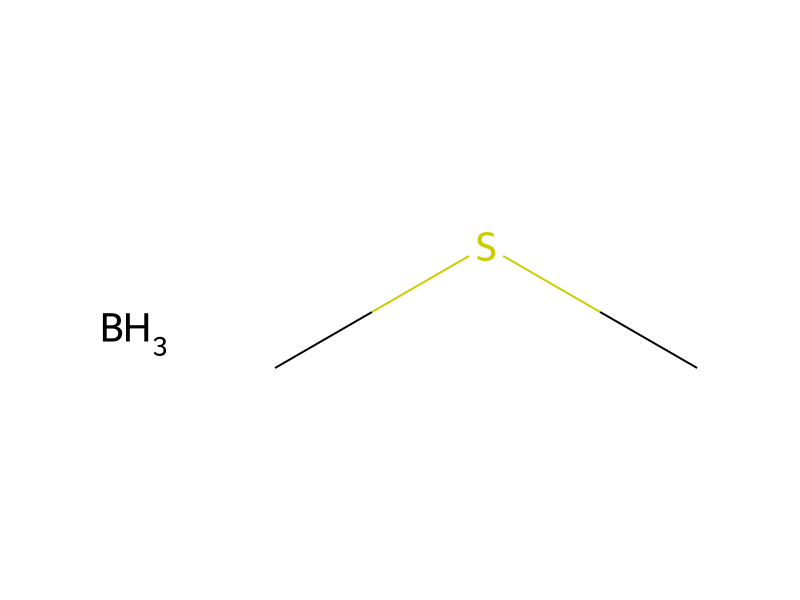
HCID 679Dimethyl SulfoxideHCID 8471TriethylamineHCID 231984-(Bis(2-chloroethyl)amino)benzenepropanoic acidHCID 65578Oxalyl chlorideHCID 12423031(Dimethyl sulfide)trihydroboron

Produkt 1

HCID 285770HCID 285770, Verbindung

Reagenzien, Katalysatoren, Lösungsmittel

1
HCID 8028TetrahydrofuranLösungsmittel3×

Reaktionsbedingungen

Temperatur
0 °C

Versuchsvorschrift

A solution of borane dimethyl sulphide (23 mmol of a 10M solution in THF) was added slowly to a stirred solution of 3-[4-(N,N-bis(2-chloroethyl)amino)phenyl]propanoic acid (VIII, n=2) [Everett, J. L., Roberts, J. J., Ross W. C. J., "Aryl-2-halogenoalkylamines. Part XII. Some carboxylic acid derivatives of N,N-di-2-chloroethylaniline", J. Chem. Soc., 1953 2386-2392] (5.5 g, 19 mmol) in TEF (190 mL) maintained at 0° C. under a N2 atmosphere. After the initial effervescence the solution was stirred for a further 4 h before being quenched with MeOH and concentrated under reduced pressure. The product was partitioned between aqueous NaHCO3 and EtOAc, and the residue from the organic phase was percolated through a pad of SiO2 (EtOAc elution) to give the crude alcohol, which was used without further purification. DMSO (1.15 mol equiv.) was added to a stirred solution of oxalyl chloride (1.1 mol equiv.) in THF (5 mL per mmol of alcohol) maintained at -78° C. under a N2 atmosphere. Stirring was continued for 10 min after which a solution of the above alcohol (1 mol equiv.) in THF (5 mL per mmol of alcohol) was added. Stirring was continued at -78° C. for a further 15 min before Et3N (5.0 mol equiv.) was added and the mixture brought slowly to room temperature. The reaction mixture was partitioned between H2O/EtOAc and the residue from the organic layer was chromatographed on SiO2 and eluted with petroleum ether/EtOAc (3:1) to give pure 3-[4-(N,N-bis(2-chloroethyl)amino]phenyl)propanal (IX, n=2) as an unstable oil (3.4 g, 68% overall yield). 1H NMR (CDCl3) δ 9.80 (t, J1,2 =1.6 Hz, 1 H, CHO), 7.08 (d, J2',3' =8.8 Hz, 2 H, H-2',H-6'), 6.62 (d, J2',3' =8.8 Hz, 2 H, H-3',H-5'), 3.69 (complex t, J=6.5 Hz, 4 H, NCH2CH2Cl), 3.68 (complex t, J=6.5 Hz, 4 H, NCH2CH2Cl), 2.87 (t, J2,3 =7.4 Hz, 2 H, H-3), 2.72 (br dt, J2,3 =7.4 Hz, and J1,2 =1.6 Hz, 2 H, H2), 2.12 (complex m, 4 H, H-2). 13C NMR δ 201.88, 144.56, 129.53, 129.36, 112.28, 53.54, 45.50, 40.48, 27.04. HRMS (EI, 70 eV) : calcd. for C13H17NO3Cl2 273.068720. Found: 273.06881.


Aufarbeitung

  1. custombefore being quenched with MeOH
  2. concentrationconcentrated under reduced pressure
  3. customThe product was partitioned between aqueous NaHCO3 and EtOAc
  4. customto give the crude alcohol, which
  5. customwas used without further purification
  6. temperaturemaintained at -78° C. under a N2 atmosphere
  7. stirringStirring
  8. waitwas continued for 10 min
  9. stirringStirring
  10. additionwas added
  11. custombrought slowly to room temperature
  12. customThe reaction mixture was partitioned between H2O/EtOAc
  13. customthe residue from the organic layer was chromatographed on SiO2
  14. washeluted with petroleum ether/EtOAc (3:1)
  15. customto give pure

Quellen und Nachweise

ORD-Eintrag
ord-f02f5bd2415343eaa0534ad7f79f41ce
Quelldatensatz
uspto-grants-1999_10
DOI
10.6084/m9.figshare.5104873.v1
Patentnummer
US05968933

Notizen zur Reaktion

Wird geladen…

Auf dieser SeiteKomponentenReaktionsbedingungenVersuchsvorschriftAufarbeitungQuellen und NachweiseNotizen zur Reaktion