StartseiteMCPWorkbenchSkills
StartseiteWorkbenchBenachrichtigungenMein Bereich
llms.txt · MCP-AnleitungDatenschutz · Nutzungsbedingungen · Supportv1.8.0
  1. Startseite
  2. /Reaktion

Water → Pyridine-4-carboxaldehyde (3-Chloropropyl)imine

HRID 1740568
Notizen
Druckvorschau

Reaktionsgleichung

Reaktionsgleichung von HRID 1740568
Cl.[Cl:2][CH2:3][CH2:4][CH2:5][NH2:6].O.[N:8]1[CH:13]=[CH:12][C:11]([CH:14]=O)=[CH:10][CH:9]=1.C([O-])([O-])=O.[K+].[K+]>C(Cl)Cl>[Cl:2][CH2:3][CH2:4][CH2:5][N:6]=[CH:14][C:11]1[CH:12]=[CH:13][N:8]=[CH:9][CH:10]=1
KomponentenVersuchsvorschriftAufarbeitungQuellen und NachweiseNotizen zur Reaktion

Komponenten

6

Edukt 4

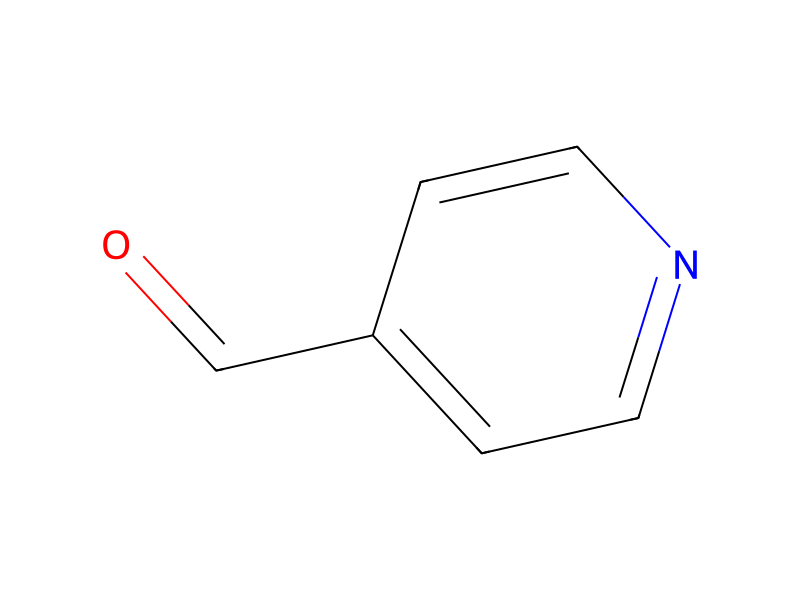
HCID 962WaterHCID 11430Potassium CarbonateHCID 133894-PyridinecarboxaldehydeHCID 114690951-Propanamine, 3-chloro-, hydrochloride

Produkt 1

HCID 10655047Pyridine-4-carboxaldehyde (3-Chloropropyl)imine

Reagenzien, Katalysatoren, Lösungsmittel 1

HCID 6344
Dichloromethane
Lösungsmittel

Versuchsvorschrift

To 3-chloropropylamine HCl (15.1 g, 0.120 moles (hereinafter mol)) and H2O (100 mL) was added pyridine-4-carboxaldehyde (9.55 mL, 0.100 mol), then K2CO3 (8.28 g, 0.060 mol) then CH2Cl2 (100 mL) and the mixture was stirred for 40 min. The phases were separated and the aq phase was extracted with additional CH2Cl2 (2×50 mL), dried (Na2SO4) and concentrated to afford 17.1 g (94%) 1H NMR (CD3Cl): d 8.69 (d, J=4.5 Hz, 2H, 8.32 (s, 1H), 8.28 (s, 1H), 7.58 (d, J=4.5 Hz, 2H), 3.71 (m, 2H), 3.63 (t, J=6 Hz, 2H), 2.24 (t, J=6Hz, 2H). The presence of 9% of the aldehyde was evident by 1H NMR.

Aufarbeitung

  1. customThe phases were separated
  2. extractionthe aq phase was extracted with additional CH2Cl2 (2×50 mL)
  3. dry with materialdried (Na2SO4)
  4. concentrationconcentrated
  5. customto afford 17.1 g (94%) 1H NMR (CD3Cl): d 8.69 (

Quellen und Nachweise

ORD-Eintrag
ord-ac26d30ebb8840d1a6f370d9f234922c
Quelldatensatz
uspto-grants-1999_10
DOI
10.6084/m9.figshare.5104873.v1
Patentnummer
US05969184

Notizen zur Reaktion

Wird geladen…

Auf dieser SeiteKomponentenVersuchsvorschriftAufarbeitungQuellen und NachweiseNotizen zur Reaktion