StartseiteMCPWorkbenchSkills
StartseiteWorkbenchBenachrichtigungenMein Bereich
llms.txt · MCP-AnleitungDatenschutz · Nutzungsbedingungen · Supportv1.8.0
  1. Startseite
  2. /Reaktion

Triisopropyl phosphite → (4S)-4-benzyl-3-{[(1R,2R)-2-(4-chlorophenyl)-4-methylenecyclopentyl]carbonyl}-1,3-oxazolidin-2-one

HRID 1743942
Notizen
Druckvorschau

Reaktionsgleichung

Reaktionsgleichung von HRID 1743942
[CH2:1]([C@H:8]1[CH2:12][O:11][C:10](=[O:13])[N:9]1[C:14](=[O:24])/[CH:15]=[CH:16]/[C:17]1[CH:22]=[CH:21][C:20]([Cl:23])=[CH:19][CH:18]=1)[C:2]1[CH:7]=[CH:6][CH:5]=[CH:4][CH:3]=1.C(O[CH2:29][C:30]([CH2:32][Si](C)(C)C)=[CH2:31])(=O)C.P(OC(C)C)(OC(C)C)OC(C)C>C([O-])(=O)C.[Pd+2].C([O-])(=O)C.O1CCCC1>[CH2:1]([C@H:8]1[CH2:12][O:11][C:10](=[O:13])[N:9]1[C:14]([C@@H:15]1[CH2:32][C:30](=[CH2:29])[CH2:31][C@H:16]1[C:17]1[CH:22]=[CH:21][C:20]([Cl:23])=[CH:19][CH:18]=1)=[O:24])[C:2]1[CH:7]=[CH:6][CH:5]=[CH:4][CH:3]=1
KomponentenVersuchsvorschriftAufarbeitungQuellen und NachweiseNotizen zur Reaktion

Komponenten

6

Edukt 3

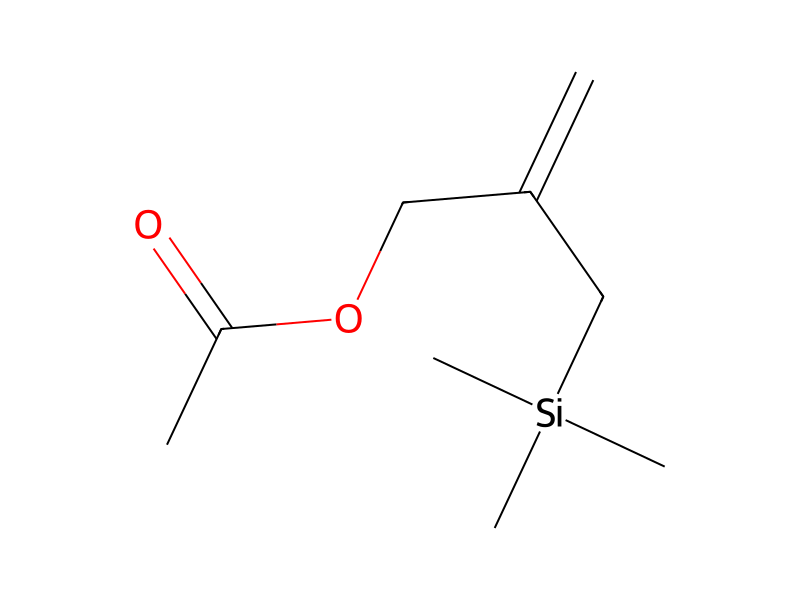
HCID 8304Triisopropyl phosphiteHCID 44283472-(Trimethylsilylmethyl)allyl acetateHCID 10246725(S)-4-benzyl-3-[(2E)-3-(4-chlorophenyl)prop-2-enoyl]-1,3-oxazolidin-2-one

Produkt 1

HCID 68518511(4S)-4-benzyl-3-{[(1R,2R)-2-(4-chlorophenyl)-4-methylenecyclopentyl]carbonyl}-1,3-oxazolidin-2-oneAusbeute 39,1 %

Reagenzien, Katalysatoren, Lösungsmittel 2

HCID 167845
palladium(II) acetate
Katalysator
HCID 8028TetrahydrofuranLösungsmittel

Versuchsvorschrift

An oven-dried 250 mL round bottom flask equipped with a magnetic stir bar and a septum, was charged with 4.705 g (13.7 mmol) of the product of Step A, 0.185 g (0.82 mmol) of palladium acetate, and 27 mL anhydrous tetrahydrofuran. The reaction mixture was freed of air by alternate cycles of degassing in vacuo and flushing with nitrogen using an external manifold attached through tubing to a needle inserted through the septum of the flask. To the brick red suspension was then added 3.80 mL (3.334 g, 17.9 mmol) 2-[(trimethylsilyl)methyl]-2-propen-1-yl acetate followed by 1.02 mL (0.860 g, 4.13 mmol) of triisopropyl phosphite. The reaction mixture was heated to reflux and stirred under nitrogen for 3 h at which point TLC analysis (15% ethyl acetate-hexanes) revealed consumption of the starting material and production of two new products. The reaction mixture was cooled to room temperature, transferred to a separatory funnel and partitioned between water and diethyl ether. The organic layer was washed with water, brine, dried (MgSO4), filtered and evaporated in vacuo. The product mixture was purified on a Biotage Flash 40i chromatography apparatus (90 g Flash 40M silica gel cartridge) eluted with 10% ethyl acetate-hexanes which afforded a less polar and a more polar product. Evaporation of the fractions containing the more polar product and drying in vacuo afforded 2.12 g of the title compound.

Aufarbeitung

  1. customAn oven-dried 250 mL round bottom flask equipped with a magnetic stir bar
  2. customof degassing in vacuo
  3. customflushing with nitrogen using an external manifold
  4. temperatureThe reaction mixture was heated
  5. temperatureto reflux
  6. customconsumption of the starting material and production of two new products
  7. customtransferred to a separatory funnel
  8. custompartitioned between water and diethyl ether
  9. washThe organic layer was washed with water, brine
  10. dry with materialdried (MgSO4)
  11. filtrationfiltered
  12. customevaporated in vacuo
  13. customThe product mixture was purified on a Biotage Flash 40i chromatography apparatus (90 g Flash 40M silica gel cartridge)
  14. washeluted with 10% ethyl acetate-hexanes which
  15. customafforded a less polar and a more polar product
  16. customEvaporation of the fractions
  17. additioncontaining the more polar product
  18. customdrying in vacuo

Quellen und Nachweise

ORD-Eintrag
ord-6cedd677edbb405ba3b16b069cbb7e6a
Quelldatensatz
uspto-grants-2006_03
DOI
10.6084/m9.figshare.5104873.v1
Patentnummer
US07012084B2

Notizen zur Reaktion

Wird geladen…

Auf dieser SeiteKomponentenVersuchsvorschriftAufarbeitungQuellen und NachweiseNotizen zur Reaktion