StartseiteMCPWorkbenchSkills
StartseiteWorkbenchBenachrichtigungenMein Bereich
llms.txt · MCP-AnleitungDatenschutz · Nutzungsbedingungen · Supportv1.8.3
  1. Startseite
  2. /Reaktion

1-Dimethylsulfamoyl-2-t-butyldimethylsilyl-5-imidazolecarboxaldehyde → 5-Cyclohexylmethyl-2-tert-butyldimethylsilyl-1-dimethylsulfamoyl imidazole

HRID 1760468
Drucken

Reaktionsgleichung

Reaktionsgleichung von HRID 1760468
CN(C)S(N1C(S[C:12]2[CH:17]=[CH:16][CH:15]=[CH:14][CH:13]=2)=CN=C1[Si](C(C)(C)C)(C)C)(=O)=O.[Li]CCCC.[CH3:31][N:32]([CH3:50])[S:33]([N:36]1[C:40]([CH:41]=O)=[CH:39][N:38]=[C:37]1[Si:43]([C:46]([CH3:49])([CH3:48])[CH3:47])([CH3:45])[CH3:44])(=[O:35])=[O:34].C(OCC)(=O)C.CCCCCC>C1COCC1>[CH:12]1([CH2:41][C:40]2[N:36]([S:33](=[O:35])(=[O:34])[N:32]([CH3:50])[CH3:31])[C:37]([Si:43]([C:46]([CH3:49])([CH3:48])[CH3:47])([CH3:45])[CH3:44])=[N:38][CH:39]=2)[CH2:17][CH2:16][CH2:15][CH2:14][CH2:13]1
KomponentenVersuchsvorschriftAufarbeitungQuellen und NachweiseNotizen zur Reaktion

Komponenten

6

Edukt 4

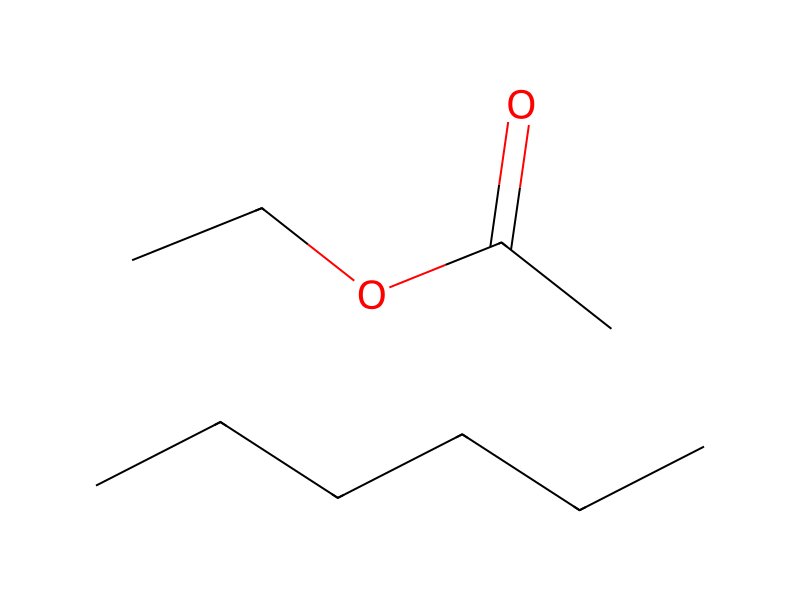
HCID 99959681-Dimethylsulfamoyl-2-t-butyldimethylsilyl-5-imidazolecarboxaldehydeHCID 21226206Ethyl acetate hexaneHCID 542304762-(t-Butyldimethylsilyl)-5-phenylsulfanylimidazole-1-sulfonic acid dimethylamide2×HCID 178418339Butyllithium

Produkt 1

HCID 225984095-Cyclohexylmethyl-2-tert-butyldimethylsilyl-1-dimethylsulfamoyl imidazole
Ausbeute 40 %

Reagenzien, Katalysatoren, Lösungsmittel 1

HCID 8028TetrahydrofuranLösungsmittel

Versuchsvorschrift

2-Tert-butyldimethylsilyl-1-dimethylsulfamoyl imidazole (1) (4.1 g, 14.2 mmol) is taken up in 47 mL of anhydrous THF and cooled to −20° C. n-BuLi (8.9 mL, 14.2 mmol) is added dropwise to the solution of (1). The resultant solution is stirred at −20° C. for 45 min. Cyclohexylmethyl iodide (2) (3.14 g, 14 mmol) is then added dropwise to the reaction mixture. Then reaction is warmed to rt and stirred overnight. The next day the reaction is quenched with saturated ammonium chloride and diluted with water. The mixture is extracted with ethyl acetate (3×100 mL). The organic layers are combined and washed with water followed by brine. The organic phase is dried over sodium sulfate and the solvent removed under reduced pressure. Flash chromatography (4:1 ethyl acetate/hexane) affords 2.26 g (5.6 mmol) of 5-cyclohexylmethyl-2-tert-butyldimethylsilyl-1-dimethylsulfamoyl imidazole (3). (3) (2.26 g, 5.6 mmol) is taken up in 56 mL of THF and cooled to 0° C. A 1M solution of TBAF in THF (5.6 mL, 5.6 mmol) is added dropwise to the solution of (3). The reaction is warmed to rt and stirred overnight. The next day the reaction is quenched with water and then extracted with ethyl acetate. The organic layer is washed with water followed by brine. The organic phase is dried over sodium sulfate and the solvent removed under reduced pressure. Flash chromatography (1:1 ethyl acetate/hexane) affords 1.2 g (4.42 mmol) of 5-cyclohexylmethyl-1-dimethylsulfamoyl imidazole (4). (4) (1.2 g, 4.42 mmol) is taken up in 25 mL of a 1.5N HCl solution and heated at reflux for 2 h. The reaction is cool to rt and diluted with ethyl acetate. The mixture is brought to pH 13 with 2N NaOH and then extracted with chloroform (4×100 mL). The organic layers are combined and washed with water followed by brine. The organic phase is dried over sodium sulfate and the solvent removed under reduced pressure. Flash chromatography (9:1 chloroform/methanol) affords 700 mg (4.27 mmol) of 4(5)-cyclohexylmethyl-1H-imidazole (5) (J-1).

Aufarbeitung

  1. customThen reaction
  2. customThe next day the reaction is quenched with saturated ammonium chloride
  3. additiondiluted with water
  4. extractionThe mixture is extracted with ethyl acetate (3×100 mL)
  5. washwashed with water
  6. dry with materialThe organic phase is dried over sodium sulfate
  7. customthe solvent removed under reduced pressure

Quellen und Nachweise

ORD-Eintrag
ord-d6a6900459ad4baa92bc5a95d49c354f
Quelldatensatz
uspto-grants-2005_01
DOI
10.6084/m9.figshare.5104873.v1
Patentnummer
US06841684B2

Notizen zur Reaktion

Auf dieser SeiteKomponentenVersuchsvorschriftAufarbeitungQuellen und NachweiseNotizen zur Reaktion