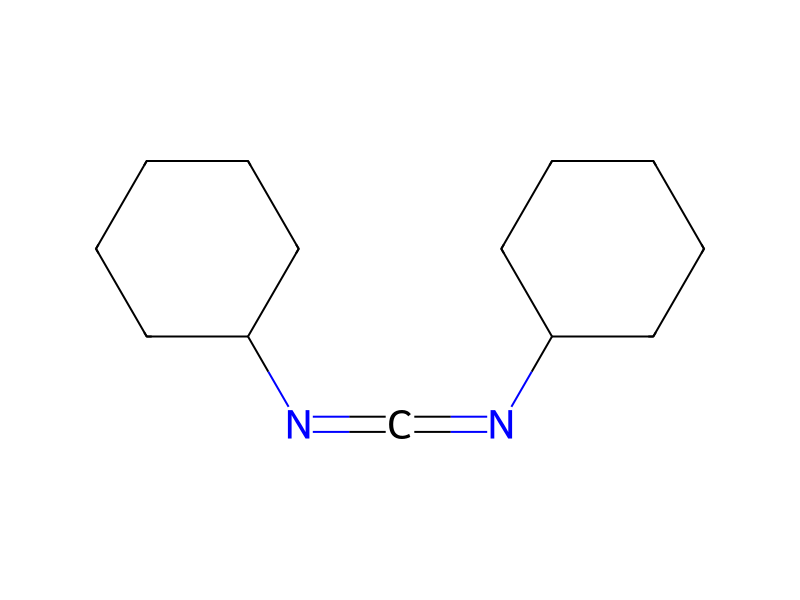
[CH3:1][C:2]1([CH3:17])[CH:4]([CH:5]=[CH:6][C:7]([O:9][CH2:10][CH:11]2[CH2:13][CH2:12]2)=[O:8])[CH:3]1[C:14]([OH:16])=[O:15].C1(N=C=NC2CCCCC2)CCCCC1>C(Cl)Cl.CN(C)C1C=CN=CC=1>[CH3:1][C:2]1([CH3:17])[CH:4]([CH:5]=[CH:6][C:7]([O:9][CH2:10][CH:11]2[CH2:13][CH2:12]2)=[O:8])[CH:3]1[C:14]([OH:16])=[O:15].[CH3:1][C:2]1([CH3:17])[CH:4]([C:5]#[C:6][C:7]([O:9][CH3:10])=[O:8])[CH:3]1[C:14]([O-:16])=[O:15]A solution of 21.6 g of the product of Step A in 75 ml of methylene chloride was added with stirring under an inert atmosphere to a solution of 19.9 g of (R, S) cyano-2-(6-phenoxypyridyl)-methanol in 75 ml of methylene chloride and then 1 g of 4-dimethylamino-pyridine was dissolved therein at 0° C. 21 g of dicyclohexylcarbodiimide were added to the mixture which was then stirred at room temperature for 4 hours and was then filtered. The filtrate was evaporated to dryness under reduced pressure at 40° C. and the residue was chromatographed over silica gel. Elution with a 7-3 cyclohexane-ethyl acetate mixture yielded 35.4 g of (R, S) cyano-2-(6-phenoxy-pyridyl)-methyl (1R, cis) 2,2-dimethyl-3-(3-methoxy-3-oxo-propynyl)-cyclopropane-carboxylate.