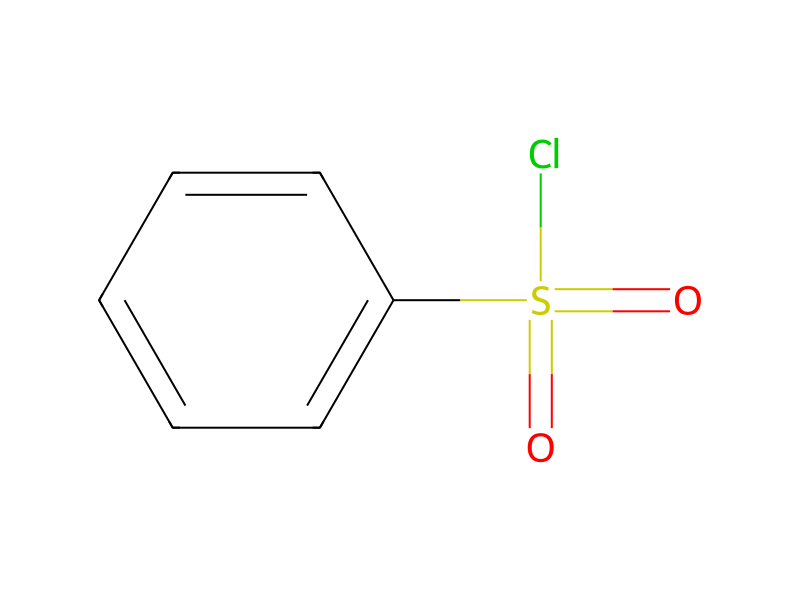
To a solution of 3-(1-methylpiperidin-4-yl)-5-hydroxy-1H-indole (4.75 g, 20.6 mmol) in dimethylformamide (25 mL), stirring at 0° C. under nitrogen, was added sodium hydride in one portion (0.83 g of a 60% dispersion in oil, 20.6 mmol). The green solution turned brown; after stirring for 30 minutes at 0° C. benzenesulfonyl chloride (2.63 mL, 20.6 mmol) was added in one portion, then the reaction mixture was allowed to stir until the reaction was complete. The solution was poured into water (125 mL), then extracted with ethyl acetate (4×125 mL). The combined organic extracts were dried over magnesium sulfate, filtered, and concentrated in vacuo to a residue which was further purified on silica gel. Elution with a 9:1 mixture of dichloromethane and 2 N ammonia in methanol provided 5.40 g (70%) of benzenesulfonic acid 3-(1-methylpiperidin-4-yl)-1H-indol-5-yl ester as a tan solid: mp=189-194° C.; 1H NMR (400 MHz, dmso-d6): 10.97 (br s, 1H), 7.85-7.72 (m, 3H), 7.65-7.54 (mm, 2H), 7.24 (d, 1H, J=8.8 Hz), 7.11 (d, 1H, J=2.0 Hz), 6.88 (d, 1H, J=1.2 Hz), 6.69 (dd, 1H, J=8.8, 1.6 Hz), 2.77 (br d, 2H, J=11.2 Hz), 2.52-2.40 (m, 1H), 2.16 (s, 3H), 1.91 (br t, 2H, J=11.2 Hz), 1.67 (br d, 2H, J=12.0 Hz), 1.58-1.44 (m, 2H); MS(ES+): m/e 371.0 (M+1).