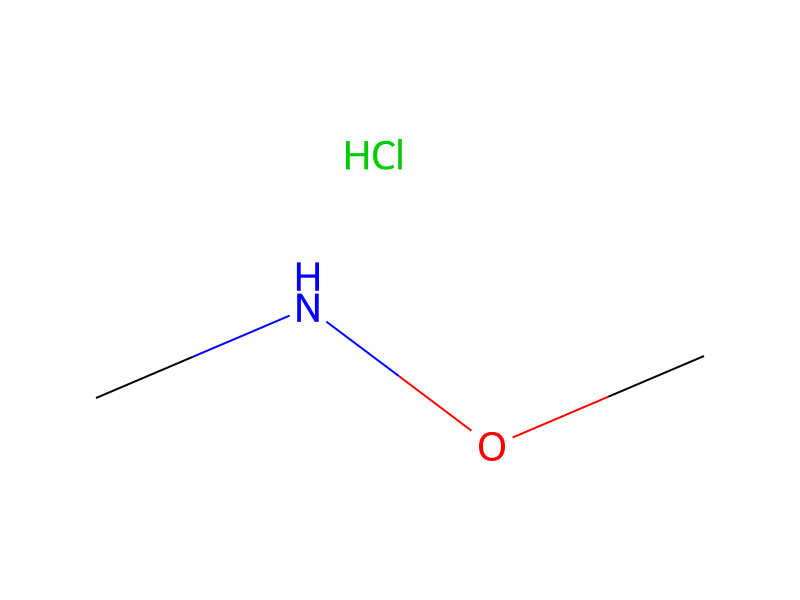
Cl.[CH3:2][O:3][NH:4][CH3:5].CCN(C(C)C)C(C)C.[Cl:15][C:16]1[CH:17]=[N:18][C:19]2[C:24]([N:25]=1)=[CH:23][C:22]([C:26](Cl)=[O:27])=[CH:21][CH:20]=2.ClC1C=NC2C(=CC=C(C(Cl)=O)C=2)N=1>C(Cl)Cl>[Cl:15][C:16]1[CH:17]=[N:18][C:19]2[C:24]([N:25]=1)=[CH:23][C:22]([C:26]([N:4]([O:3][CH3:2])[CH3:5])=[O:27])=[CH:21][CH:20]=2To a solution of O,N-dimethyl-hydroxylamine hydrochloride salt (29 g, 0.30 mol, 1.1 eq) and DIEA (182 mL, 1.08 mol, 4.0 eq) in DCM (300 mL) was added the mixture of 3-chloro-quinoxaline-6-carbonyl chloride and 2-chloro-quinoxaline-6-carbonyl chloride (52 g, 0.27 mol, 1.0 eq) at 0° C. The mixture was stirred at rt overnight, then concentrated. The residue was washed with water (300 mL×2) and extracted with EA (300 mL×2). The combined organic layers were dried over anhydrous Na2SO4, filtered and concentrated. The resulting solid was triturated with EA/PE=1/1 (300 mL) to afford 3-chloro-N-methoxy-N-methylquinoxaline-6-carboxamide (16.5 g, 24.3%).
Wird geladen…