4-Chlorobutyryl chloride → N-(1-bromo-3-isopropyl-4-oxo-3,4-dihydro-phthalazin-6-yl)-4-chloro-butyramide
Reaktionsgleichung

[NH2:1][C:2]1[CH:11]=[C:10]2[C:5]([C:6]([Br:16])=[N:7][N:8]([CH:13]([CH3:15])[CH3:14])[C:9]2=[O:12])=[CH:4][CH:3]=1.[Cl:17][CH2:18][CH2:19][CH2:20][C:21](Cl)=[O:22]>CN(C=O)C>[Br:16][C:6]1[C:5]2[C:10](=[CH:11][C:2]([NH:1][C:21](=[O:22])[CH2:20][CH2:19][CH2:18][Cl:17])=[CH:3][CH:4]=2)[C:9](=[O:12])[N:8]([CH:13]([CH3:14])[CH3:15])[N:7]=1Komponenten
4
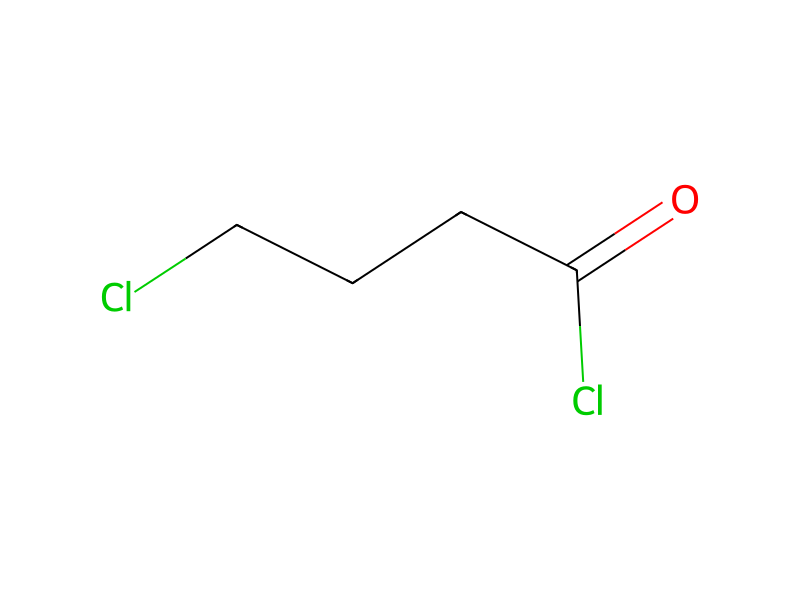



Versuchsvorschrift
To a solution of 7-amino-2-isopropyl-4-bromo-2H-phthalazin-1-one (0.5 g, 1.8 mmol) in DMF (8 ml), was added TEA (0.28 ml, 1.98 mmol). After 5 min, 4-chlorobutyryl chloride (0.22 ml, 2.0 mmol) was added and the solution was stirred at RT for 2 hours. After this time LC-MS indicated the complete consumption of starting material and the mixture was diluted with DCM (30 ml) and washed with HCl (1M, 20 ml). The organic layer was separated, dried (MgSO4) and concentrated under vacuum. The residue was subjected to flash column chromatography (elution: 60% heptane, 40% EtOAc) to give N-(1-bromo-3-isopropyl-4-oxo-3,4-dihydro-phthalazin-6-yl)-4-chloro-butyramide (0.46 g, 67% yield) as a white solid.