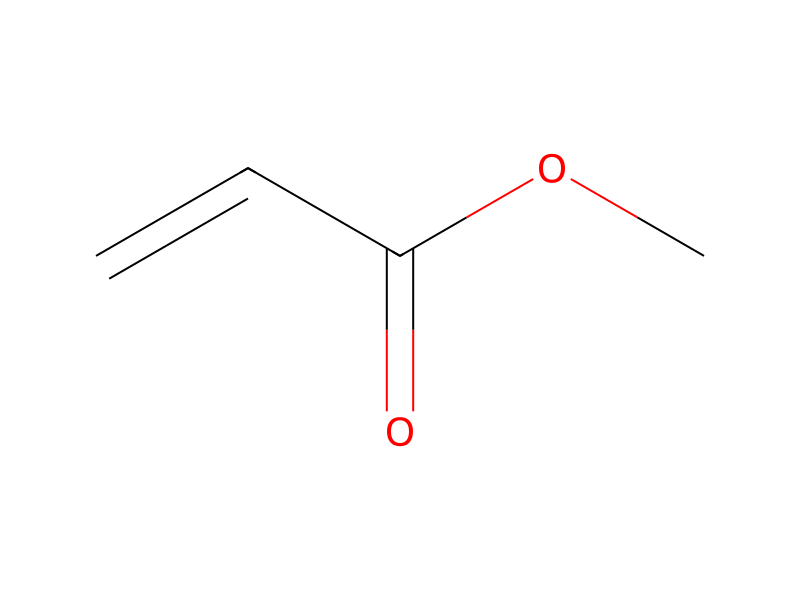
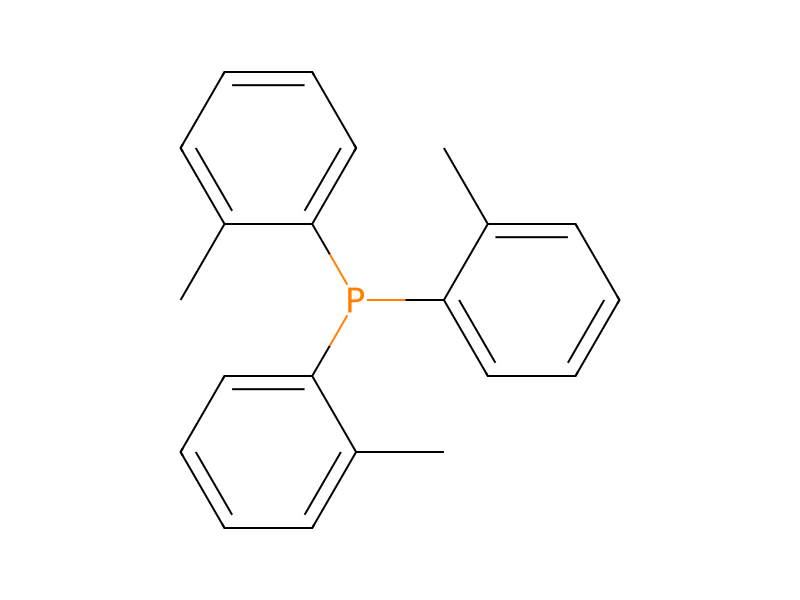
Br[C:2]1[C:10]2[O:9][C:8]([C:11]3[CH:16]=[CH:15][C:14]([OH:17])=[CH:13][CH:12]=3)=[CH:7][C:6]=2[CH:5]=[C:4]([OH:18])[CH:3]=1.[C:19]([O:23][CH3:24])(=[O:22])[CH:20]=[CH2:21].C1(C)C=CC=CC=1P(C1C=CC=CC=1C)C1C=CC=CC=1C.Cl>C(N(CC)CC)C.C(#N)C.C([O-])(=O)C.[Pd+2].C([O-])(=O)C>[CH3:24][O:23][C:19](=[O:22])[CH:20]=[CH:21][C:2]1[C:10]2[O:9][C:8]([C:11]3[CH:16]=[CH:15][C:14]([OH:17])=[CH:13][CH:12]=3)=[CH:7][C:6]=2[CH:5]=[C:4]([OH:18])[CH:3]=1To a solution of 7-bromo-2-(4-hydroxy-phenyl)-benzofuran-5-ol 58 (1.0 g, 3.3 mmol) in triethylamine (10 mL) and acetonitrile (10 mL) was added methyl acrylate (0.44 mL, 4.9 mmol) and tri-(o-toly) phosphine (0.2 g, 0.66 mmol). This mixture was purged with nitrogen for 10 minutes. Then palladium (II) acetate (0.037 g, 0.17 mmol) was added and the reaction was heated at reflux for 4 hours; To the cooled reaction was added 2N HCl and the product was extracted into ethyl acetate. The organic layer was washed with brine, dried over MgSO4 and the solvent removed in vacuo. The residue was purified via flash. chromatography on silica gel, eluting with 22–50% ethyl acetate in hexane to give 0.16 g of 59: Mp=231–234° C.; 1HMR (DMSO-d6) δ 9.93 (s, 1 H), 9.44 (s, 1 H), 7.80 (d, 1 H, J=16.1 Hz), 7.72 (d, 2 H, J=8.6 Hz), 7.13 (s, 1 H), 7.02 (d, 1 H, J=2.3 Hz), 6.98 (d, 1 H, J=2.3 Hz), 6.93 (d, 1 H, J=16.2 Hz), 6.92 (d, 2 H, J=8.6 Hz) 3.79 (s, 3 H); MS 311 (M+H)+