Trityl chloride → 4-(2-bromophenyl)-1-trityl-1H-imidazole
Reaktionsgleichung

[Br:1][C:2]1[CH:7]=[CH:6][CH:5]=[CH:4][C:3]=1[C:8]1[N:9]=[CH:10][NH:11][CH:12]=1.C(N(CC)CC)C.[C:20](Cl)([C:33]1[CH:38]=[CH:37][CH:36]=[CH:35][CH:34]=1)([C:27]1[CH:32]=[CH:31][CH:30]=[CH:29][CH:28]=1)[C:21]1[CH:26]=[CH:25][CH:24]=[CH:23][CH:22]=1>CN(C)C=O>[Br:1][C:2]1[CH:7]=[CH:6][CH:5]=[CH:4][C:3]=1[C:8]1[N:9]=[CH:10][N:11]([C:20]([C:21]2[CH:26]=[CH:25][CH:24]=[CH:23][CH:22]=2)([C:33]2[CH:34]=[CH:35][CH:36]=[CH:37][CH:38]=2)[C:27]2[CH:28]=[CH:29][CH:30]=[CH:31][CH:32]=2)[CH:12]=1Komponenten
5
Edukt 3
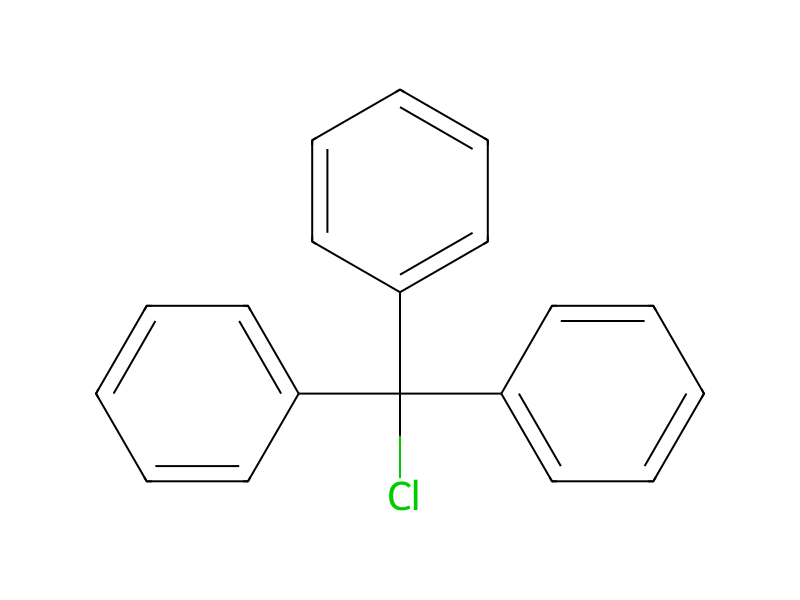


Produkt 1

Reagenzien, Katalysatoren, Lösungsmittel 1

Versuchsvorschrift
To a solution of crude 4-(2-bromo-phenyl)-1H-imidazole (73.5 g, 0.33 mol) and triethylamine (45.8 ml, 0.33 mol) in dry dimethylformamide (750 ml) at 0° C. was added a solution of trityl chloride in dry dimethylformamide (850 ml) dropwise over 40 min. When the addition was complete, the ice bath was removed and the reaction was stirred at room temperature for 1.5 h. Then the reaction mixture was poured into a stirring mixture of ice water (ca. 2.0 L). A light orange solid precipitated. After stirring for 20 min the solid was filtered and dried to give a light amber solid. This solid was used in the next reaction without further purification.