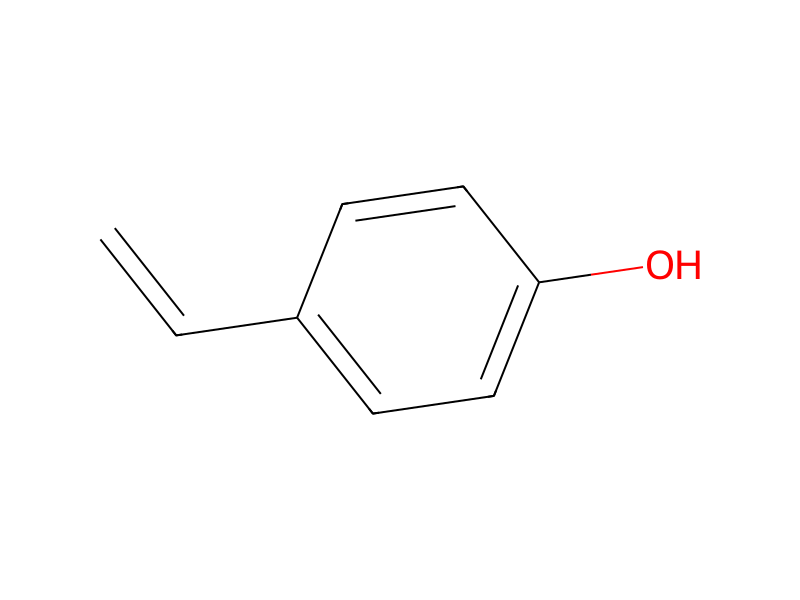
A 300 ml glass-made three-neck flask was charged with 0.134 mol of p-vinylphenol, 0.343 mol of imidazole and 90 ml of dimethylformamide as a solvent, and a solution prepared by dissolving 0.174 mol of triisopropylsilyl chloride in 90 ml of dimethylformamide was dropwise added thereto at 0° C. in 50 minutes. Then, the reaction temperature was elevated up to room temperature to carry out reaction for 10 hours in the same condition. Water was added thereto, and the reaction product was extracted with chloroform. The solvent was distilled off, and the residue was dissolved in diethyl ether and washed with a sodium hydroxide aqueous solution and water. The product was dried on magnesium sulfate and filtered, and then it was further dried on a calcium hydride. Then, the reaction product was distilled at a reduced pressure under nitrogen flow to obtain aimed p-triisopropylsilyloxystyrene at a yield of 70%.